

The Foundation
Grounded in a review of 50 of Bangladesh’s most funded startups from 2020–2022 and informed by ecosystem analyses from institutions such as LightCastle Partners, World Bank, and McKinsey & Company, this piece examines the structural realities behind rapid growth and long-term fragility.

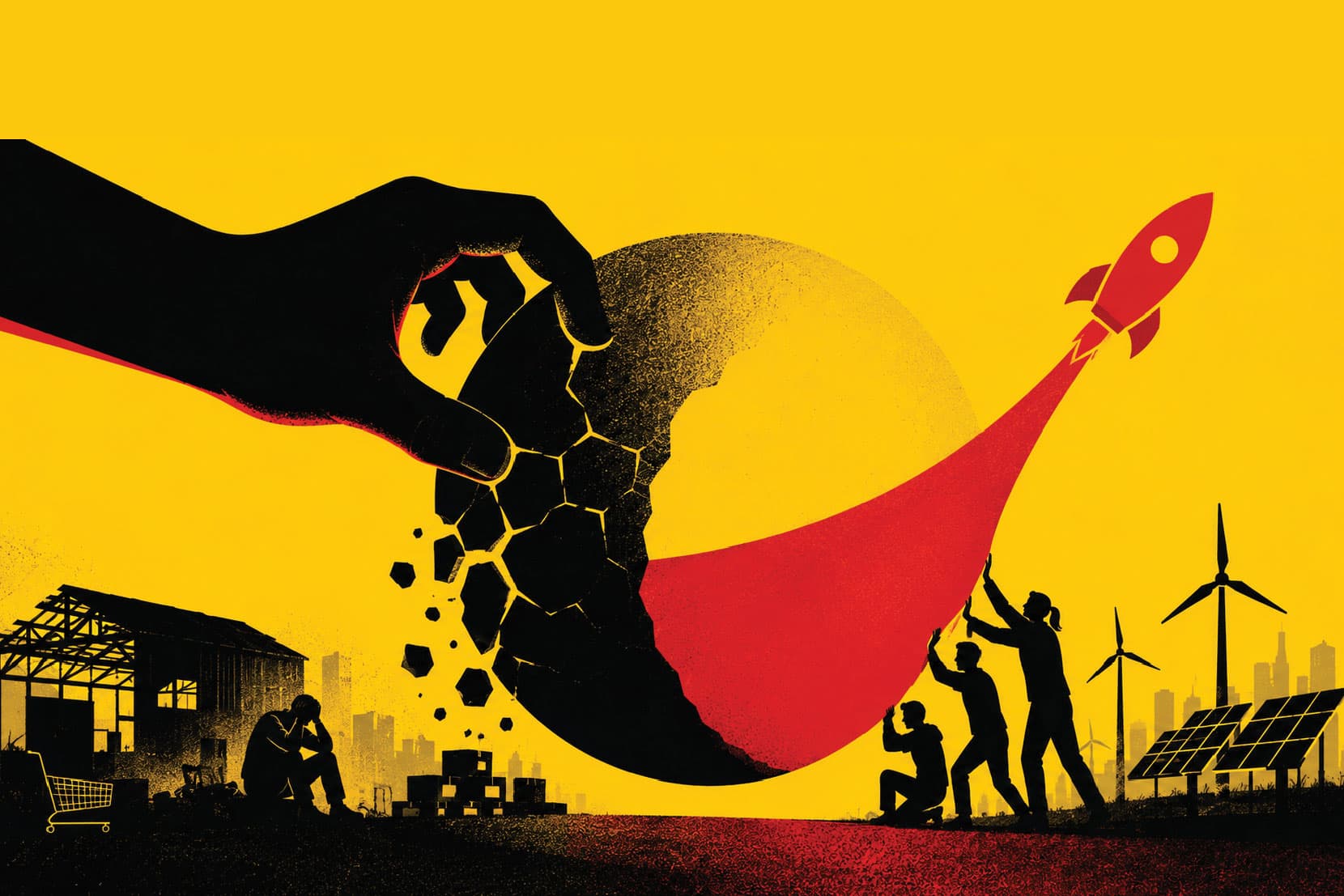
Illustrated By sk. yeahhia
27 May, 2026
Bangladesh entered lockdown in the early months of COVID-19 pandemic and that massively gripped traditional industries. The country witnessed a different shift in the startup space during this period, specifically from 2020 to 2022. This shift created a long-awaited entrepreneurial inflection point in Bangladesh with low interest rates, increased digital adoption, and a wave of modern ways of businesses supported by global venture capital.
Now in 2026, this shift, and optimism, require a harder look. A harsh reality has been observed from the comprehensive analysis of the top 50 funded startups launched or scaled from 2020 to 2022. Over 60% businesses and startups have either shut down, pivoted, or remain active and operational only by name, with zero to negligible return on investment and social impact.
This is a case study of how startups can grow rapidly without sufficient structural and functional grounding. It should not be framed as a story of failure; rather, it is a story of misalignment between funding and need, and between opportunities and skills.
A harsh reality has been observed from the comprehensive analysis of the top 50 funded startups launched or scaled from 2020 to 2022. Over 60% businesses and startups have either shut down, pivoted, or remain active and operational only by name, with zero to negligible return on investment and social impact.
The Illusion
Bangladesh startup ecosystem received venture funding across an estimated USD 400 million from 2020 to 2022. E-commerce, fintech, edtech, and logistics are some of the major sectors that attracted the lion’s share. Some startups raised Series A and B rounds within 12-18 months of inception which is a pace rarely seen in emerging ecosystems.
A closer look at the data showed that nearly 70% of these startups were operating at negative unit economics from the outset. Customer acquisition costs were masked by aggressive discounting and investor backed subsidies and were often 2-3 times higher than the lifetime value. However, the results left a disappointing mark in reality though having an impressive growth on dashboards.
Three Patterns of Collapse
1. Scaling ahead of Systems: Approximately 30% of startups grew faster than they could handle. Logistics platforms expanded nationwide without strong supply chain systems. Edtech companies onboarded thousands of users without ensuring content quality. After the pandemic, when demand stabilised, these cracks turned into full-blown breakdowns.
2. Copy-Paste Business Models: Approximately 25% of startups relied on models copied from India or Southeast Asia without adapting to Bangladesh’s social and economic context. In price-sensitive markets, subscription models failed. Hyperlocal delivery struggled due to weak addressing systems. What worked elsewhere could not be directly replicated.
3. Dependency on External Funding Cycles: Approximately 20% of startups became vulnerable when global venture funding slowed in 2023 amid tighter economic conditions. With less than a year of runway and no clear revenue model, closures became inevitable.
The remaining failures were linked to governance issues, founder conflicts, or regulatory misalignment, each contributing smaller but significant percentages.

Playbook of the Survivors
Roughly 15-20% of the analysed startups have survived — and in some cases, grown stronger. What sets them apart is not luck, but discipline.
Early focus on unit economics: They prioritised sustainable margins over rapid expansion. (Source: McKinsey & Company venture scaling insights; CB Insights startup failure analyses)
Localised innovation: Instead of copying global models, they built solutions tailored to Bangladesh’s infrastructure and consumer behaviour. (Source: LightCastle Partners ecosystem reports; BRAC Institute of Governance and Development studies)
Operational resilience: They invested in backend systems, talent, and governance — even when it slowed short-term growth. (Source: World Bank private sector resilience studies; Harvard Business School case research on startup scaling)
Interestingly, many of these companies grew more slowly in the 2020–2022 period, often overlooked in headline funding announcements. Today, they are the ones still standing.
A Systemic Reflection
The founder is, of course, responsible when a startup fails, but they are not the only one to blame. If we do this, we will be ignoring the bigger ecosystem's problems, changes, and situations. Investors often put speed ahead of due diligence because they didn't want to "miss out." Accelerators put more weight on pitch decks than on product-market fit. Media stories focused on valuation milestones instead of lasting effects.
Approximately 20% of startups became vulnerable when global venture funding slowed in 2023 amid tighter economic conditions.
What Comes Next
The Class of 2020 can be understood as a pilot phase within a much larger journey of business and startup development. It offers a clear blueprint for the future capturing key learnings, challenges, and directions for what comes next. In this sense, the Bangladesh startup ecosystem is not failing; it is evolving, correcting itself through experience and reflection. For the next generation of entrepreneurs, these insights serve as critical lessons to build on.
No matter how great your idea is, solid execution with proven profitability is mandatory.
Contextualisation is important. What works in the west may not work in the east through copy-paste.
Funding dependency will not take startups further, a self-sufficient business model is a requirement to sustain.
From valuation and user growth to retention, revenue quality, and long term impact — metrics need to be evolved. The shift must be equally intentional for investors, and ecosystem builders, not only for entrepreneurs.
The empty warehouses and abandoned apps of the past five years are not just symbols of failure. They show a system that is learning, even if that learning has been painful and necessary. The Class of 2020 may not have delivered on what it first promised. But what it leaves behind is clarity about what works, what doesn’t, and what needs to change. Bangladesh’s startup future will not be built on hype. It will be built on resilience, relevance, and rigour. And maybe, that is a much more sustainable place to begin.


%20Square%20Ad%20-11.jpg&w=640&q=75)
%20Horizental%20AD-01.jpg&w=3840&q=75)
