

The Foundation
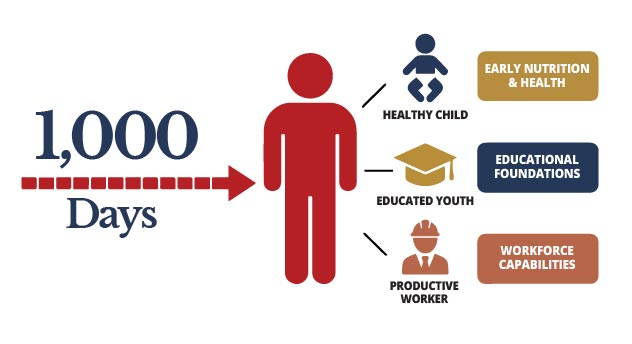
A child's future does not begin on the first day of school. By the time a child walks into a classroom, some of the most important foundations for learning, health and development have already been established. They begin during pregnancy and continue through the first two years of life, a period widely recognised as the first 1,000 days.

Illustrated By sk. yeahhia
22 September, 2026
These 1,000 days represent an unusually important window in human development. The brain and body are developing rapidly, the immune system is maturing and the foundations for physical and cognitive development are being established. Nutrition, maternal health, healthcare, sanitation and the environment in which a child grows all contribute to this process. What happens during these early years can influence not only whether a child survives and grows, but also the capacity with which that child enters school, progresses through education and eventually participates in the economy.
This makes early childhood development more than a health issue. It is also an investment in human capital.
WHEN NUTRITION BECOMES A FOUNDATION FOR LEARNING
Adequate nutrition is fundamental to this process. During the first two years of life, children require sufficient energy and essential nutrients to support rapid physical growth, brain development and immune function. When those needs are not met, the effects can be visible in growth as well as in less immediately visible aspects of development. Chronic undernutrition, for example, can lead to stunting, in which a child is significantly shorter than expected for their age. Yet stunting is not simply a matter of height. Poor growth in early life is associated with increased vulnerability to illness and can accompany difficulties in cognitive and physical development. The significance lies precisely in the fact that these disadvantages emerge during a period when the foundations for later learning are being established.
The consequences of inadequate nutrition can therefore extend well beyond infancy. A child who is frequently ill or whose development has been affected by chronic undernutrition may enter school facing disadvantages that began years before the first lesson. Those disadvantages do not determine a child's future — children are highly adaptable, and education, healthcare, family support and social programmes can substantially alter developmental trajectories — but they can influence the conditions from which a child begins. In that sense, the first 1,000 days are a window of opportunity: an opportunity to address risks early, while development is still highly responsive to the conditions surrounding the child.
THE MOTHER IS PART OF THE EQUATION
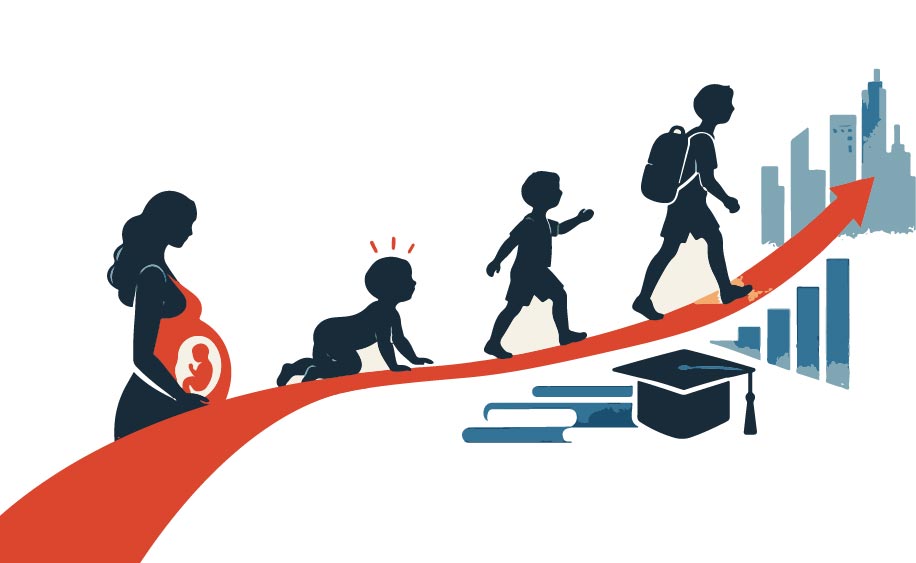
Maternal health and education are an important part of that picture. A mother's health during pregnancy can influence the health of her child, while her education can affect how she understands nutrition, hygiene, healthcare, breastfeeding, child development and the recognition of illness. Education may also make it easier to navigate health systems and make informed decisions about childcare. For these reasons, maternal education has repeatedly been associated with child nutrition and growth.
But the relationship is not as straightforward as the phrase "more education, healthier children" might suggest.
A recent systematic review and meta-analysis examining population-based cohort studies of mothers and healthy children from birth to two years found that the relationship between maternal education and child growth varied according to the country's income level and educational context. That finding is particularly relevant when considering how development policy should work in practice. Education can provide knowledge and improve decision-making, but knowledge cannot compensate entirely for the absence of resources.
A mother may understand the importance of a nutritious diet but lack the income to purchase nutritious food. She may recognise the signs of illness but live far from a functioning health facility. She may understand the importance of clean water and sanitation while lacking reliable access to either. In such circumstances, the gap is not necessarily a lack of knowledge. It is the gap between knowing what is needed and having the means to act on that knowledge.
This is why maternal education should be considered alongside the broader conditions in which families live. Better education can be powerful, but its benefits are more difficult to realise when healthcare is inaccessible, nutritious food is unaffordable, sanitation is inadequate or households face severe economic insecurity. The implication for policymakers is not that education matters less, but that education works most effectively as part of a wider system of support.
That system matters because the effects of early childhood conditions eventually reach beyond health.
FROM THE FIRST 1,000 DAYS TO THE CLASSROOM
Education is often discussed as though learning begins when a child enters school, but the capacity to learn is itself influenced by what happens beforehand. Healthy physical and cognitive development can help prepare children to engage with school, while chronic illness and nutritional deprivation can create additional barriers. Over the years, small differences in readiness, health and development can accumulate. A child who begins school with disadvantages may require greater support to keep pace, and educational difficulties can in turn affect later opportunities.
The relationship should not be reduced to a simple claim that early nutrition determines academic performance. Educational outcomes are shaped by a wide range of factors, including the quality of schools, teachers, family circumstances, social environment and economic opportunity. Nevertheless, early health and development form part of the foundation on which those later factors operate.
FROM EDUCATION TO THE WORKFORCE
That foundation has implications for the labour market as well.
The workforce of a country is, ultimately, built from the children growing up within it. Years before a person enters employment, investments in nutrition, health and education are already influencing the capabilities that person will eventually bring to the workplace. Education provides knowledge and skills; good health helps people acquire and apply those skills; and economic opportunity determines how effectively those capabilities can be translated into productive employment.
Seen from this perspective, childhood nutrition is not simply a question of welfare. It is part of a country's long-term human-capital strategy.
Poor nutrition and ill health during childhood can leave preventable disadvantages that follow individuals through their educational and working lives. Conversely, improving early development can help create healthier populations with stronger educational foundations and greater capacity to participate productively in the economy. The returns may take years to become visible, but that is precisely the nature of human-capital investment: decisions made in one stage of life can shape economic outcomes much later.
WHEN ADVANTAGE AND DISADVANTAGE PASSES BETWEEN GENERATIONS
There is also an intergenerational dimension. The conditions in which one generation grows up can influence the conditions it is able to provide for the next. A woman who has benefited from education, healthcare and adequate nutrition may be better positioned to make informed decisions about her own pregnancy and child, while greater economic opportunity can provide households with more resources to invest in food, healthcare and education. A healthier child can have better opportunities to learn; greater educational attainment can improve employment prospects; and improved economic security can make it easier for the next generation to grow up in healthier conditions.
The reverse can also occur. Poverty can limit access to adequate food and healthcare; poor maternal health can increase risks during pregnancy; inadequate nutrition can impair development; developmental disadvantage can create additional challenges in school; and limited educational attainment can restrict employment opportunities later in life. These factors can reinforce one another, allowing disadvantage to persist across generations.
Breaking that cycle requires thinking beyond individual behaviour. Families make decisions within the constraints created by their economic and social environment. Asking mothers to make better nutritional or healthcare choices is of limited value if nutritious food is unaffordable, healthcare is inaccessible or basic infrastructure is inadequate. Effective investment in the first 1,000 days therefore requires attention to mothers as well as children, and to the systems that surround them.
For businesses and policymakers alike, this broader perspective matters. Workforce quality is often discussed in terms of vocational training, university education, technology and skills development. Those investments are essential, but they address the workforce relatively late in its development.
WHY THERE IS NO SINGLE SOLUTION
This is also why there is no single intervention capable of solving the problem across every country. The evidence on maternal education illustrates the point: its association with child growth varies across different economic and educational settings. A policy that produces meaningful gains in one context may have a smaller effect in another because the barriers facing families are different. Improving maternal education, expanding healthcare access, strengthening nutrition programmes, improving sanitation and addressing household economic insecurity should therefore be understood as complementary investments rather than competing solutions.
For businesses and policymakers alike, this broader perspective matters. Workforce quality is often discussed in terms of vocational training, university education, technology and skills development. Those investments are essential, but they address the workforce relatively late in its development. The capabilities of a future employee are being shaped long before that person enters university, applies for a first job or receives professional training.
The foundation is being laid in childhood.
This is what makes the first 1,000 days such a consequential period. They represent a relatively small portion of a person's life, but they occur at a point when development is moving rapidly and the effects of health, nutrition and care can extend into later stages of life. The objective is not to suggest that a child's future can be predicted from the circumstances of infancy, nor that early disadvantage is irreversible. It is to recognise that the conditions surrounding those first years can influence the opportunities available later.
THE INVESTMENT BEGINS BEFORE SCHOOL
We often describe investment in education as investment in the future. We build schools, train teachers, expand universities and develop workforce programmes because we understand that today's children will eventually become tomorrow's workers, professionals, entrepreneurs and leaders. Yet the investment in human capital begins even earlier.
Before a child learns to read, the brain must develop. Before a student can benefit fully from a classroom, the foundations for health and development must be in place. And before a future worker can contribute skills to an economy, that worker must first have had the opportunity to grow, learn and develop.
The first 1,000 days may be only 1,000 days, but they occupy the opening chapter of a much longer economic and human story.
A child's first classroom is not a school building. It begins before birth — in the health of the mother, the nutrition available to the family, the quality of care a child receives and the conditions in which those earliest years unfold.
For societies thinking seriously about educational attainment, workforce quality and long-term economic growth, that is where the foundation begins.


