

features
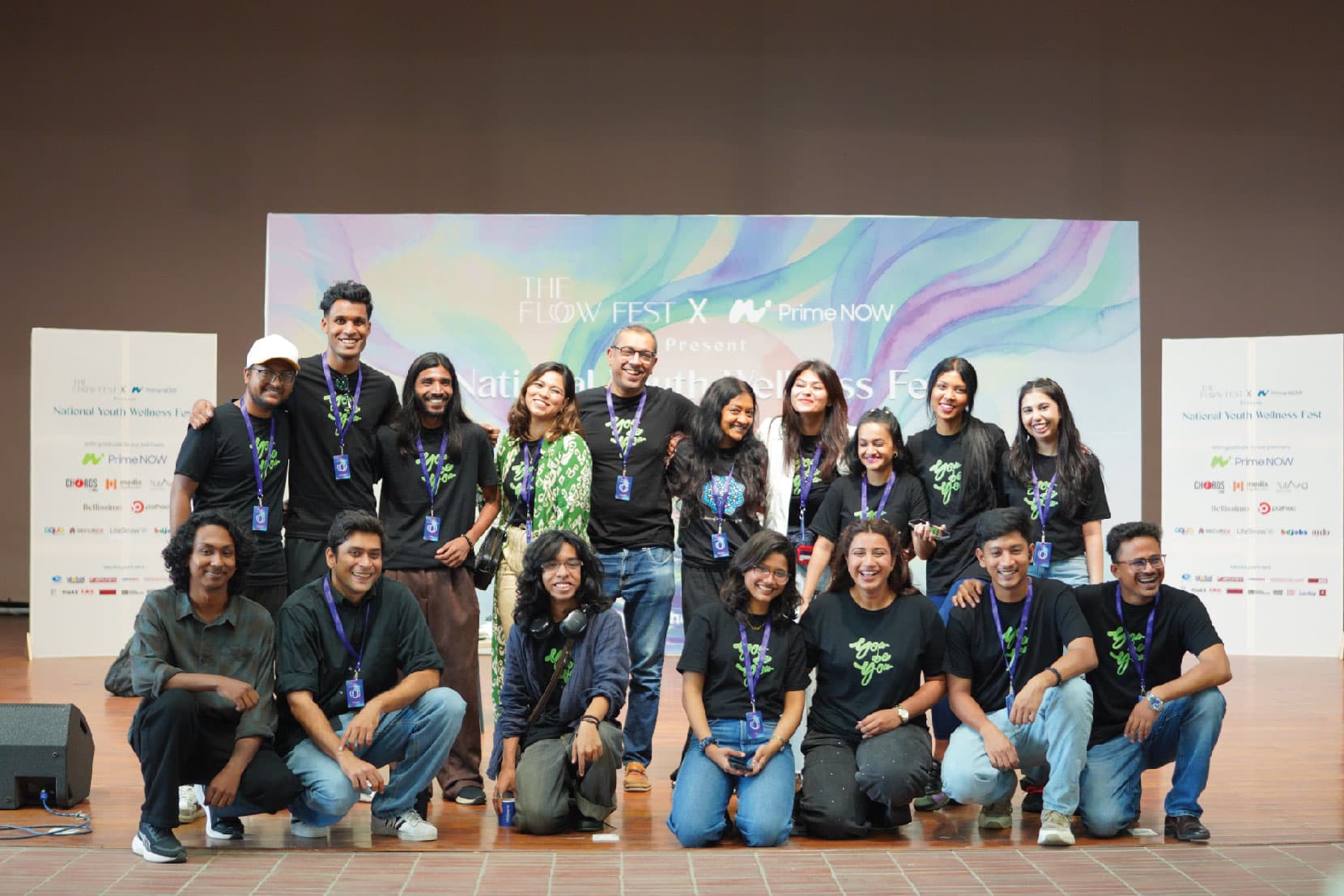
At the 3rd National Youth Wellness Festival by The Flow Fest, held at BRAC University, nearly a thousand students from ten universities moved between dialogue, movement, and shared experience, quietly reimagining what well-being can look like in practice.

Photograph by collected
27 May, 2026
With declining mental health, the pressure of a modern neoliberal capitalistic lifestyle that promotes consumerism and increases isolation, war, economic downfall and a recession, today's youth is exhausted. Anxiety is no longer an anomaly, rather a parasite that has found home in your aesophagus. It feeds on your misery and loneliness. Despite trying to fill the void by buying more things, at the end of the day we still crave human connection, which is one of the reasons why social media addiction is on the rise. It is today’s youth’s one last-ditch effort at holding on to a community. The last semblance of connecting to humans before the AI takes over.
In this state, the most countercultural thing you can do is put your phone down. And this is precisely what nearly a thousand students, representing ten universities, gathered to do at the Multipurpose Hall of BRAC University between April 22 and 23, for the 3rd National Youth Wellness Festival, presented by The Flow Fest and sponsored by Prime Now.
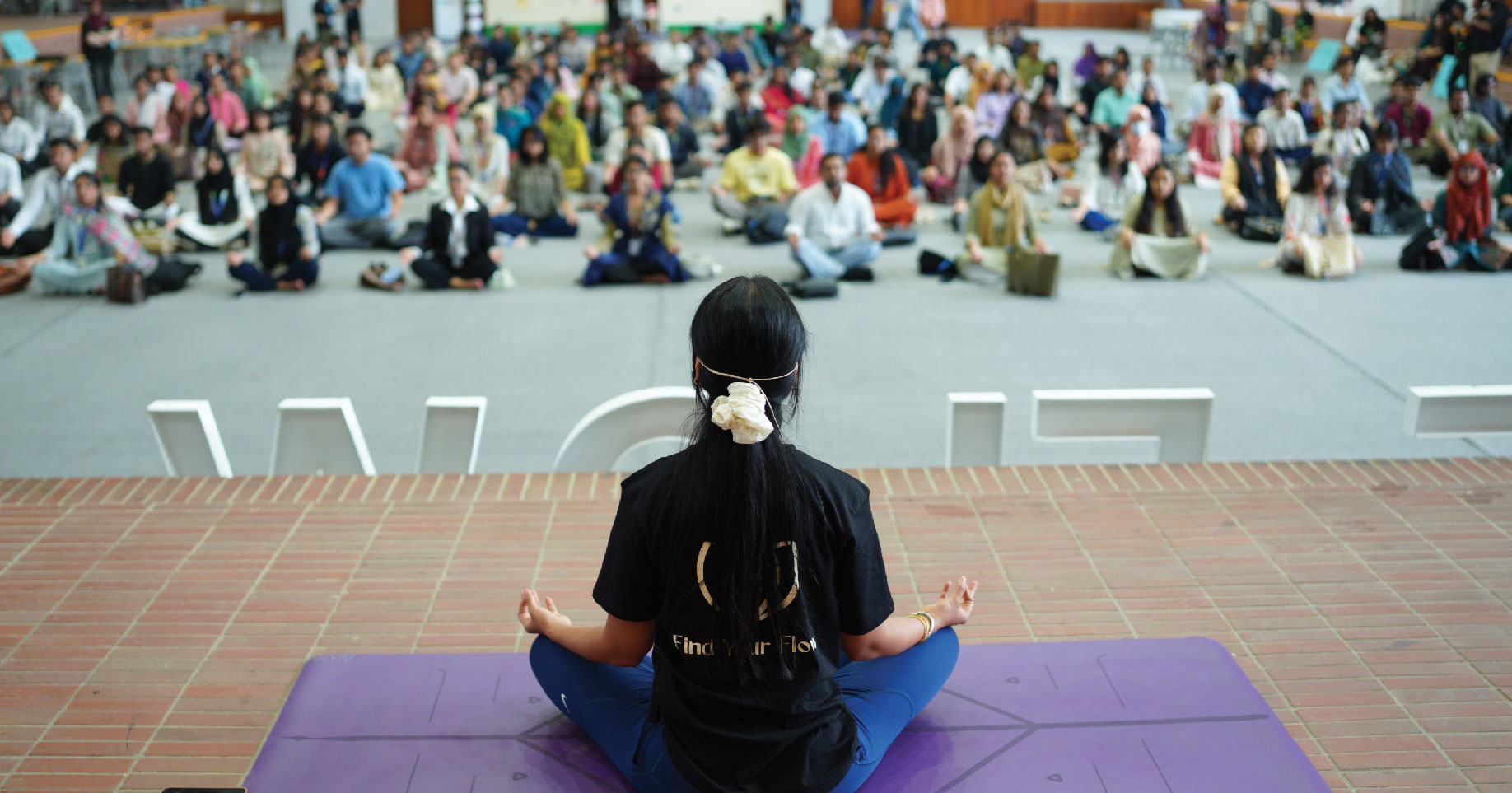
The theme of the event, “You Be You: Find Your Flow,” felt almost radical in a culture where one’s path often seems set from the moment of birth. In a time marked by political unrest and a steady erosion of free speech, the motto feels quietly radical, encouraging authenticity and the courage to forge one’s own path, as the event’s segments gradually gesture toward a freer, healthier, more expansive future.
The four pillars of this organisation are movement, mindfulness, creativity, and community. There were segments for each of the pillars. It also included deep dives on financial literacy by welcoming entrepreneurs and businessmen to discuss various topics and their own journeys.
The event opened with the energetic presence of Shazia Omar, a writer, yogini, activist, and founder of The Flow Fest. She was joined on stage by Tabith Awal, President of BFF, and Israfil Khosru, founder of the youth-led think tank The Bangladeshi and a member of the BCB ad-hoc committee. From there, the energy shifted from words to movement, as Tasmiah Rahman, BRAC University’s current PhD student and a Flow instructor, led the audience through synchronised breathing exercises and yoga.
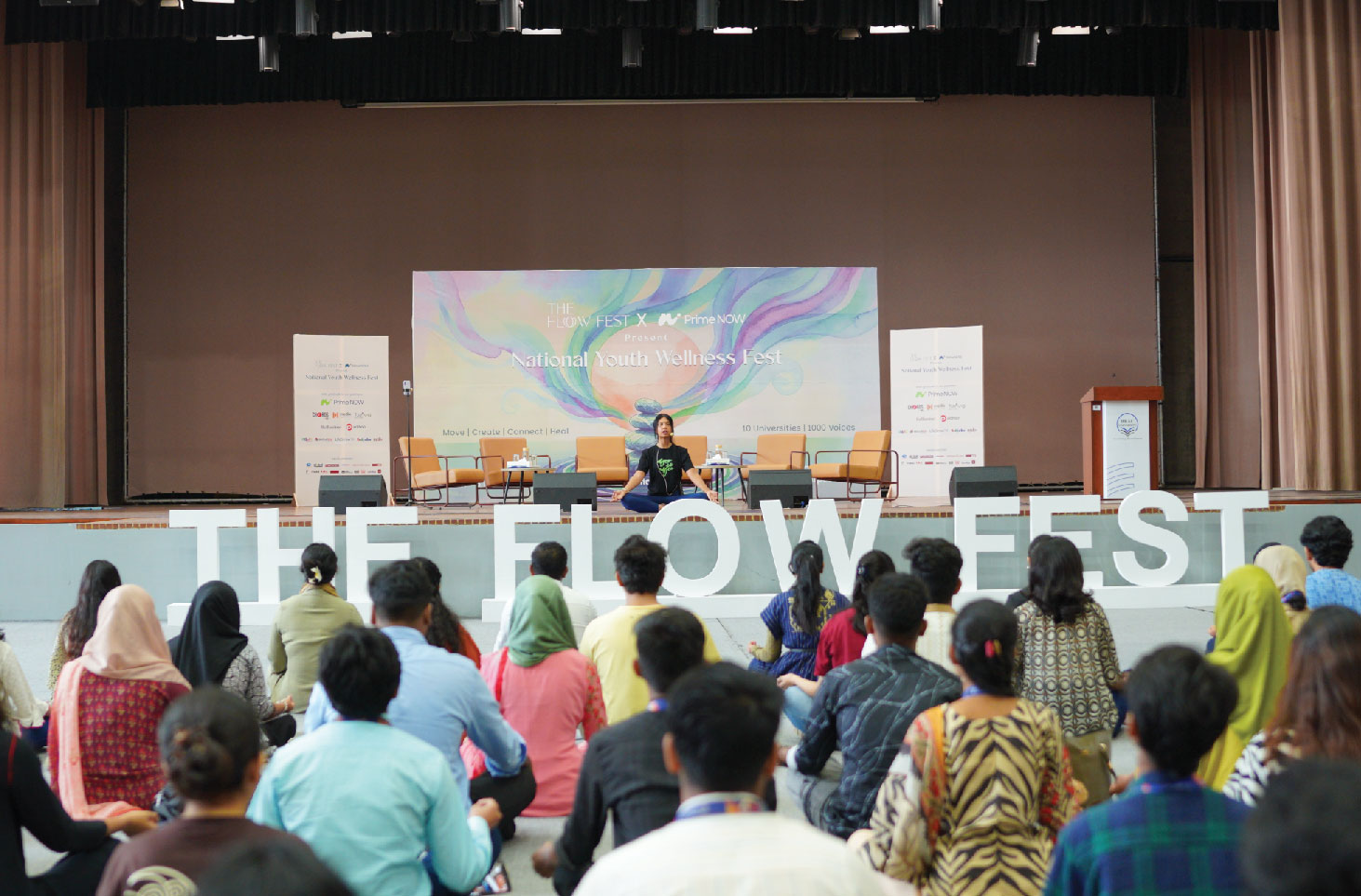
The next day continued in a similar spirit, with Maisha Khan guiding students through a simple yet quietly transformative breath-body-mind meditation. A dance session with Arthi followed as the crowd stood, moved, and danced together, hand in hand.
The focus then shifted to financial wellbeing, beginning with a session featuring young founders who had built platforms of their own. The first session brought together young founders behind a range of platforms, from a website connecting content creators with sponsors to Deshicupid, a matchmaking platform for Bangladeshis. The audience remained fully engaged as questions moved quickly across the room, ideas were tested in real time, and candid, practical advice on making them work was shared freely.
The programme then moved into Shareapy circles, facilitated by a team from Medix, including a psychiatrist and two psychologists. Each circle gathered six participants, most of them strangers who had happened to sit beside one another. They were invited into conversation, and then gently, into vulnerability. By the close of the session, participants were asked to exchange numbers with at least one person, carrying with them a new connection formed in the space.
The Healing Hour unfolded across fourteen stations, each offering a different mode of expression or release. There was graffiti with Aqua Paints, mini canvases with Brushstory, a gratitude wall, and art therapy sessions led by Detepriya Roy Chowdhury. Participants could write to release with Kashfy Ahmed, sit for caricatures by Ahsana, or step into a photo booth by Prestige. Elsewhere, there was fencing with Deshi Fencers, poi spinning with Poi Nation, and “feel it to paint it” with Ohama, alongside pickleball with Lotto, art healing with Cartoon People, movement sessions led by Rawan Ahmed Chowdhury and Wahida Husain, and self-defence training with Shadman Sakif and Ed Alcanzare.
A free jhalmuri stall, notably, drew a steady crowd and did not disappoint. My own takeaway was a modest one, a vision board assembled from scraps of paper and glue. I tend to value what I can touch, but the impact of the session, on myself and others, lingered in ways less easily measured.
Jarin Khondokar, a student from Daffodil University, shared that she had initially hesitated to attend, the distance from home feeling like a barrier. After the experience, she said it had been worth every bit of the journey. The smaller activities had helped more than expected, and the interviews, she added, were deeply thought-provoking.
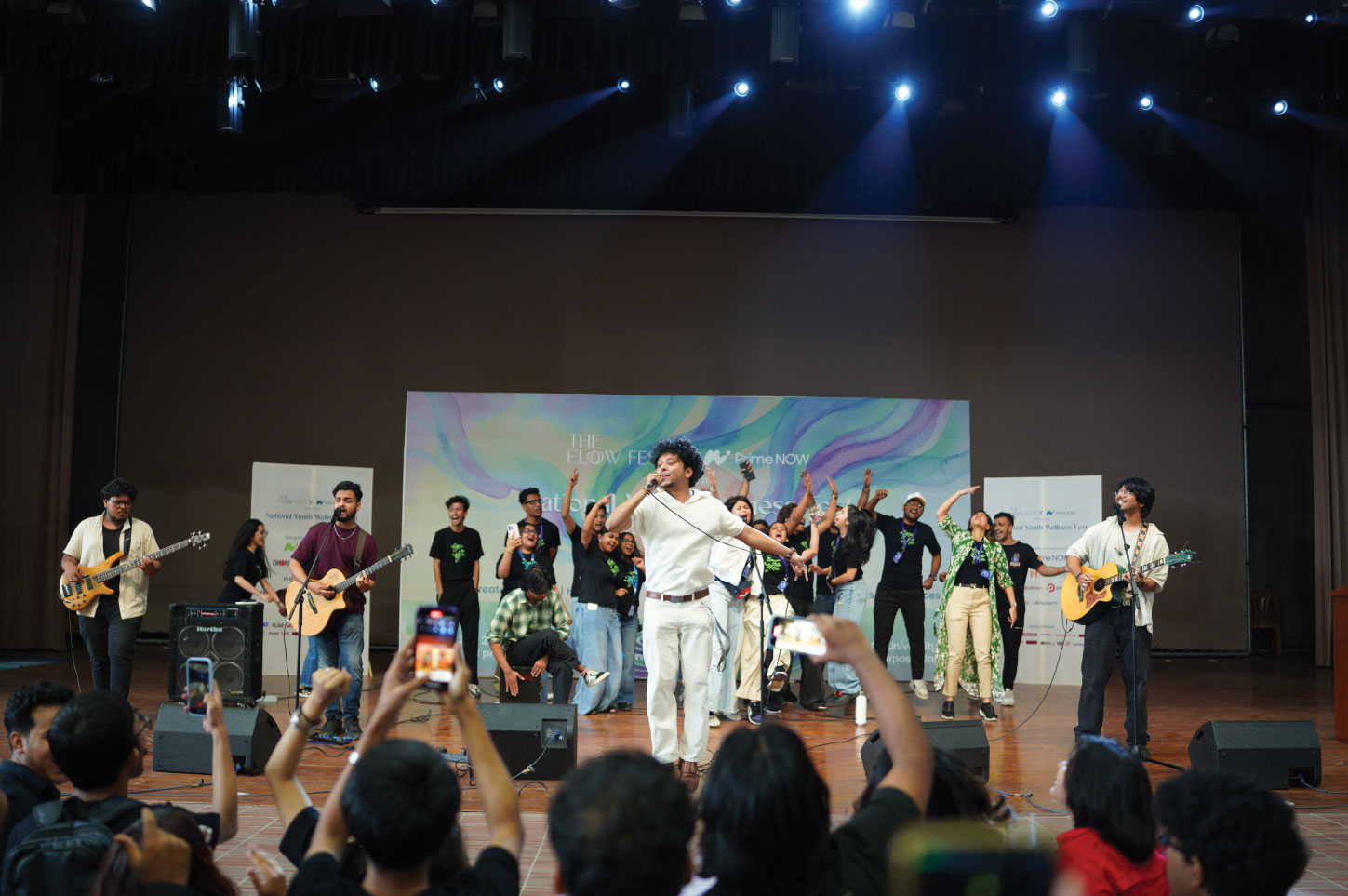
Each day of the festival closed with music. The first ended in a soulful sing-along with Black Bus, while the second concluded with a live performance by Vintage Theory.
In an age of constant screen time and dwindling physical presence, something as simple as shared breath, joined hands, and collective movement can feel almost radical. The 3rd National Youth Wellness Festival by The Flow Fest appears to recognise this, transforming the noise of the crowd into something closer to a quiet, sustained rebellion.


%20Square%20Ad%20-11.jpg&w=640&q=75)
%20Horizental%20AD-01.jpg&w=3840&q=75)
