

features
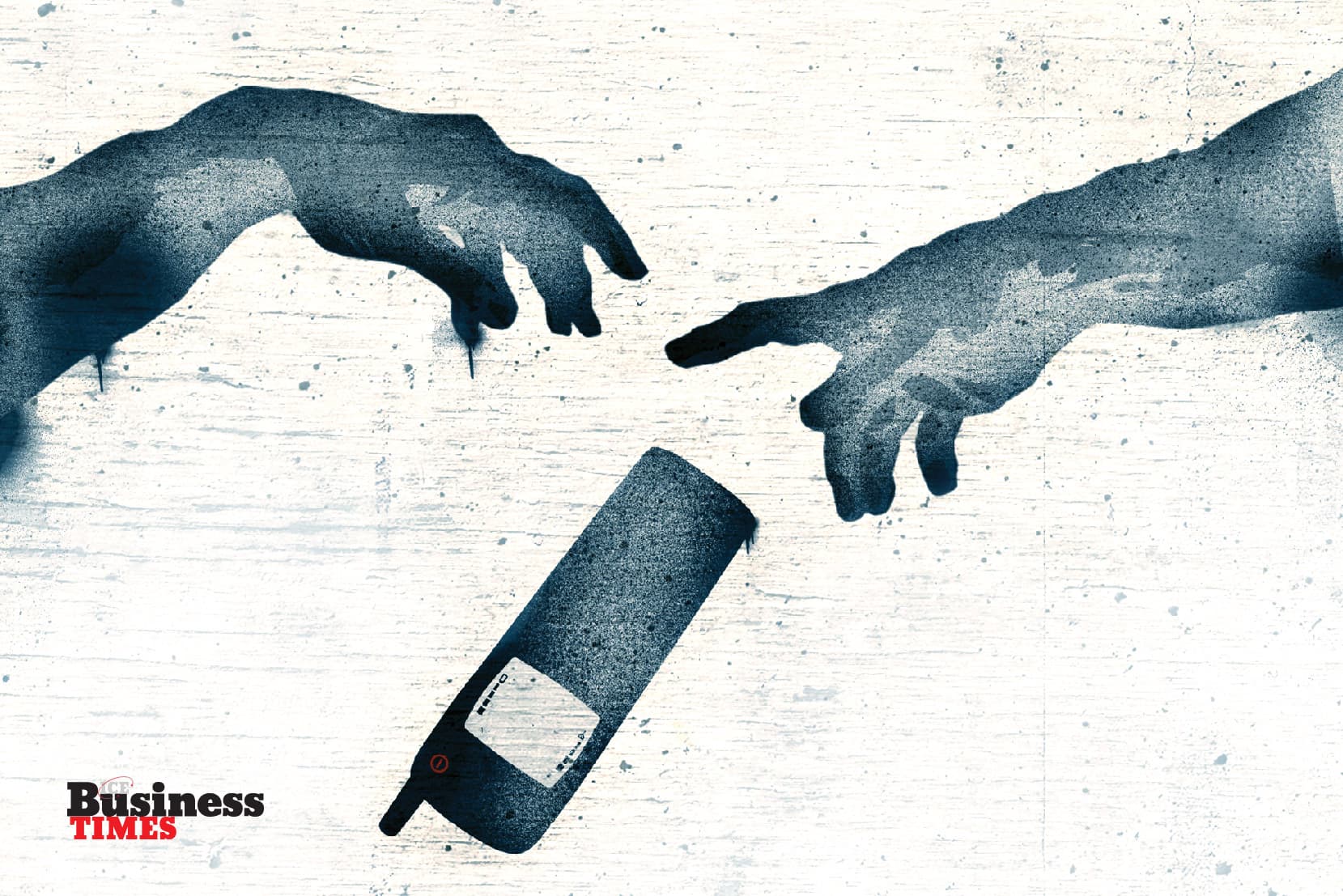
The story of Nokia and how it went from being the biggest phone company in the world to losing its legacy virtually overnight.

Photograph collected
12 July, 2025
Nokia is a technology company that was once the uncontested champion in the mobile phone industry. When it was founded in 1865, Nokia used to manufacture paper products, and then, in 1967, when Nokia Corporation was established, it moved on to rubber, cables, boots, and consumer parts and electronics. Thus, Nokia entered the communications market almost 100 years after its founding.
Military Radio and the First Car-Phone Network
In the 1960s, the Finnish government wanted military research into radiotelephone communications, and decades later, during the height of the Cold War, Nokia got the contract from the Finnish government to develop a radio car-telephone network that spanned all of Finland. In the 1980s, mass production allowed Nokia to scale operations, make devices smaller, pack in more features, and offer products at much cheaper prices.
By 1985, Nokia started exporting its products, selling to the United States, where the concept of mobile phones captivated the market. Nokia realised the full potential of the mobile phone market when its sales predictions were exceeded by 3,000% in the U.S.
Early Handsets and Economic Headwinds
Nokia was able to have such a fantastic start in the mobile-communications industry because of its ability to tailor products to different markets while simultaneously maintaining efforts in various other industries. A notable product from Nokia came in 1987, the Mobira Cityman 900. It was one of the first handheld cell phones and the first Nokia phone to make major headlines. Despite the enthusiasm and positive reception, Nokia faced an external crisis between 1988 and 1989 when the Soviet Union collapsed and Europe underwent a major recession. Consequently, the demand for Nokia’s other products seemed to dry up overnight.
Ollila the Saviour
Nokia understood that it needed a change in management and appointed Jorma Ollila as its CEO in 1992. Ollila transformed Nokia from near bankruptcy to a global success with one crucial decision. He shut down all other operations of Nokia and focused only on the mobile industry.
Ollila’s decision paid off. In the 1990s, the mobile industry was booming, and Nokia was outperforming competitors in sales globally. This was a time when social-media culture had not yet started, and consumer expectations were only on a phone’s durability, reliability, and user-friendliness. At this nascent stage of the mobile industry, Nokia had great intuition and insights, which allowed it to dominate the space.
Innovation and Market Leadership
Nokia knew that the future would lie in mobile phone software. In 1992, Nokia introduced the 1011, the world’s first GSM digital phone. In 1994, the 2110, which had memory for an address book, missed-call alerts, and a larger, easier-to-read display, was one of the first phones to send and receive text messages. In 1997, the 6110 was released, becoming the first phone to feature the popular mobile game, Snake.
By 1998, Nokia had become the number-one phone manufacturer in the world, overtaking Motorola. Nokia wanted an active role in software development and partnered with Symbian to install Symbian OS on its devices. In 1999, the 3210 penetrated the tech-savvy teenager market, massively growing Nokia’s popularity. In the early 2000s, Nokia unveiled the 6650, the world’s first 3G phone, and the 7650, the world’s first camera phone.
By 2005, Nokia had become the number one digital-camera brand worldwide. Around this time, it was experimenting with designs to capture new audiences. Gaming consoles were on the rise, so Nokia came up with the N-Gage. However, the N-Gage was not well received. It resembled a gaming console, yet, didn't perform like one, and it also failed as a user-friendly handheld phone. That same year, Motorola unveiled the Razr, a worldwide success that caught the attention of Nokia’s investors.

Investor Pressure and the Beginning of Decline
Investors were disappointed that Nokia’s management was focusing on making ‘smart’ phones instead of on the still-lucrative feature-phone market (‘dumbphones’). They wanted to sell high-end, expensive feature phones rather than invest in innovations.
In 2006, CEO Ollila was replaced by Nokia’s chief financial officer, Olli-Pekka Kallasvuo. The new Nokia CEO merged its smartphone and basic phone divisions and prioritised the bottom line. Instead of looking to the future, Nokia moved backwards, focusing only on traditional phones. This marked the beginning of the end of Nokia’s amazing run.
The Smartphone Era and Initial Missteps
Nokia had the makings of a modern smartphone company with its N-series, particularly the N95, which featured a high-quality camera, web browsing, Bluetooth, Wi-Fi, 3G, GPS, and an application ecosystem for Symbian OS; everything except the capacitive touchscreen that consumers are used to today.
In 2007, Nokia received its first blow when Apple released the iPhone with its full-touch interface. The iPhone lacked 3G capability, GPS, video recording, a camera flash, MMS support, or expandable storage, yet it was still more appealing than the Nokia N95. The very next year, Google released its first Android phone, and the battle of the smartphone operating systems began.
Nokia responded with the all-touchscreen Nokia 5800, which, while praised for its low price, was criticised for poor software implementation. Instead of seizing an opportunity to improve, Nokia fell victim to its arrogance, maintaining that smartphones were not a threat to its market.
Nokia engineers claimed that the iPhone would be too expensive to manufacture, run on a primitive network, and would never survive one of Nokia’s drop tests. That arrogance is understandable, given Nokia’s long leadership, but by 2008, its executives conceded that its software needed to be on par with the new industry standards set by Apple.
Internal conflict then emerged. One team revamped Symbian OS while another built a new OS from the ground up called MeeGo. Each faction fought for executive attention and funding and spent little time on actual design. Nokia’s business partners were frustrated, and operations were highly inefficient. Paul Jacobs, former CEO of Qualcomm, commented that in 2008, whenever an opportunity presented itself to Nokia, it sometimes took six to nine months to assess it, by which time the opportunity was long gone.
Key executives struggled to steer such a huge multinational and kept throwing money at problems instead of solving them wisely, by, for instance, switching to the Android OS. However, Anssi Vanjoki of Nokia’s smartphone division management simply dismissed Android with foul language and never pursued that idea.
The new Nokia CEO merged its smartphone and basic phone divisions and prioritised the bottom line. Instead of looking to the future, Nokia moved backwards, focusing only on traditional phones.
Elop and His Strategic Overhaul
Nokia reached its darkest hour in 2010, when Stephen Elop, who had held positions at Microsoft from 2008 to 2010, took over as CEO. At that time, Nokia was spending USD 5 billion on R&D, almost 30% of the entire industry’s R&D budget. Seeing that Nokia could not launch a legitimate competitor to the iPhone despite such a heavy investment, Elop shut down all non-essential R&D wings. By then, Apple’s and Google’s app stores had already taken off, while Nokia was still deciding how to revamp its operating system.
In February 2011, Elop and Microsoft CEO Steve Ballmer announced a major partnership. Nokia would become the primary platform for Windows OS on future smartphones, replacing both Symbian and MeeGo. In October 2011, Nokia released the first Windows phone under the Lumia lineup, but even after four models, the app store remained insufficient to attract consumers.
Rapid Decline and Microsoft Acquisition
By mid-2013, Nokia was making an operating loss of EUR 115 million, and in the second quarter, revenues fell by 24%. In one year, Nokia had sustained EUR 4.1 billion in operating losses.
In September 2013, Microsoft acquired Nokia’s mobile phone division in a deal totalling USD 7 billion, transferring Stephen Elop from Nokia CEO back to Microsoft as head of devices. This controversial move was regarded by many as a strategic killing blow. Speculation arose that Microsoft had played the long game with Nokia - installing a former Microsoft executive as CEO, then acquiring the company, and finally reabsorbing its leader. In 2014, Microsoft announced it would phase out the Nokia name from Lumia phones, rebranding them as Microsoft Lumia.
The End of an Era
Thus ended the legacy of Nokia as a cellphone brand. The rise and fall of Nokia is a repeat cautionary tale in the business world - being first with a good idea offers no guarantee of commercial success. The Palm WebOS, Intel MID, and the Xerox Alto are just a few examples of revolutionary first ideas that never captured lasting market share.
At its peak, Nokia controlled nearly 40% of the global mobile phone market, a dominance few technology companies have ever achieved. Yet today it stands on the brink of entirely exiting the handset business, a stark reminder that market leadership is never guaranteed.
Nokia’s story underscores the critical importance of continual innovation, agile decision-making, and humility in the face of disruptive change. As the industry moves forward, the lessons of Nokia’s rise and fall will resonate for years to come.


%20Square%20Ad%20-11.jpg&w=640&q=75)
%20Horizental%20AD-01.jpg&w=3840&q=75)
