

Global Economy
By operationalising the world’s first molten salt reactor fueled by thorium, China is cautiously reviving decades-old nuclear research with the potential to reshape the global energy landscape.

Illustrated By sk. yeahhia
3 July, 2025
In the remote deserts of Gansu Province, a quiet but consequential event has taken place. For the first time in decades, a nuclear reactor powered not by uranium, but by thorium, an element long sidelined by the global energy establishment, has gone live. Its design is unconventional, its fuel controversial, and its potential immense. While the reactor is small and still in its testing phase, it represents the culmination of research that dates back to the Cold War and was left dormant for over half a century.
China’s successful commissioning of the world’s first operational thorium molten salt reactor (MSR) marks not merely a scientific milestone but a potential inflection point in the global energy economy. Drawing on declassified U.S. research from the 1960s, Chinese scientists have resurrected and advanced a technology once abandoned in the West. By demonstrating that thorium can be bred into fissile uranium‑233, harnessed safely in a low-pressure molten salt medium, and refuelled while the reactor is still online, China has signalled its intent to transition from fossil fuel dependency toward a more secure, high-yield nuclear future.
The implications extend far beyond the reactor hall. A thorium-powered world could undercut traditional fuel markets, shift geopolitical leverage, and redefine the calculus of public-sector versus private-sector roles in strategic energy innovation.
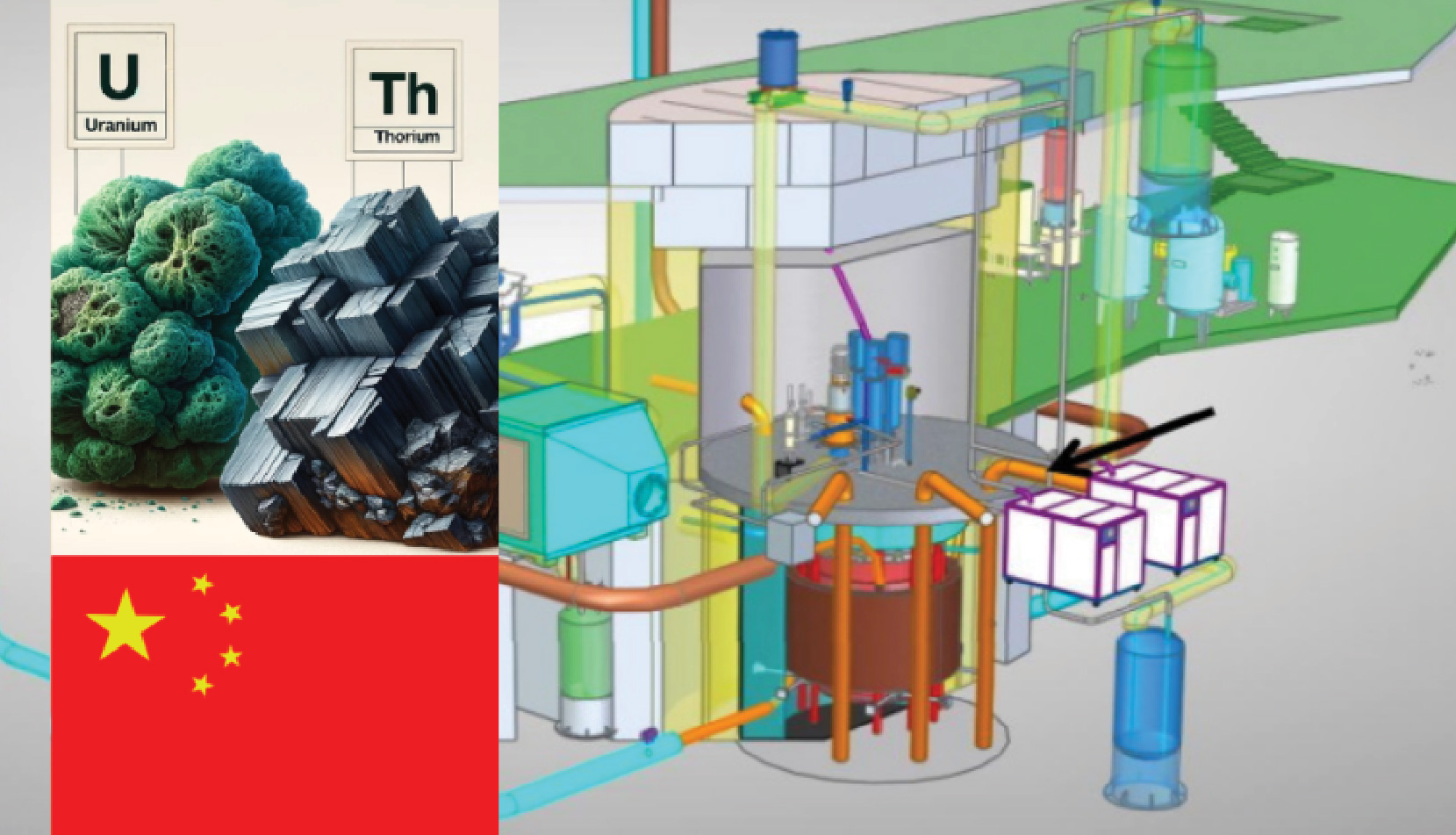
Thorium’s Advantages
Thorium’s attraction lies principally in its abundance and inherent safety characteristics. Unlike uranium, which is geographically concentrated and politically sensitive, thorium is roughly three to four times more plentiful in the Earth’s crust. Estimates suggest that 5,000 tonnes of thorium could meet global electricity demand for an entire year, and a single substantial mine could theoretically supply enough material to power the planet virtually indefinitely. From an economic standpoint, this abundance promises far more stable fuel prices over the long term, insulating consumers and national budgets from the cyclical volatility of oil, gas, and even uranium markets.
Safety considerations further bolster thorium’s economic appeal. In an MSR, fissile material is dissolved in liquid fluoride salts operating at atmospheric pressure and temperatures near 700 degrees Celsius. Should cooling fail, a passive ‘freeze plug’ melts, allowing salt to drain into subcritical storage tanks, eliminating the risk of catastrophic meltdown. Moreover, thorium reactors generate negligible quantities of long‑lived transuranic waste; most by‑products decay to safe levels within a few centuries, far shorter than uranium‑based waste. Reduced waste‑management costs and diminished environmental liabilities could translate into lower levelised costs of electricity (LCOE) and more favourable financing terms for new plants.
Historical Abandonment of Thorium
Thorium’s path to prominence has been anything but straightforward. In the United States during the 1960s, Alvin Weinberg’s MSR Experiment at Oak Ridge National Laboratory demonstrated the viability of a thorium‑fueled MSR. Despite promising results, including high breeding ratios and stable operation, the project was terminated in 1969. Strategic priorities had shifted toward uranium‑fueled pressurised water reactors that supported both civilian power generation and the rapid production of weapons‑grade plutonium. Institutional inertia, licensing complexities, and a physicist‑driven nuclear establishment further marginalised thorium’s chemistry‑intensive approach. As a result, decades of public research lay dormant.
A thorium-powered world could undercut traditional fuel markets, shift geopolitical leverage, and redefine the calculus of public-sector versus private-sector roles in strategic energy innovation.
China's Revival of Thorium
The revival of thorium technology began in earnest in the early 2000s, when NASA engineer Kirk Sorensen highlighted Weinberg’s work as a solution for lunar energy systems. Although the U.S. paid no attention to Sorensen, Chinese researchers quietly took notice of his proposition, recognising the strategic value of thorium. In 2009, China launched its own molten‑salt research program, systematically decoding declassified American literature and iterating on reactor design. Under the leadership of Professor Xu Hongjie at the Chinese Academy of Sciences, the Gansu TMSR‑LF1 project reached first criticality on 11 October 2023 and achieved full 2MW output by 17 June 2024. Crucially, in early 2025, it carried out the world’s first live refuelling of a thorium reactor, marking the potential of online fuel‑cycle control.
Global Energy Implications
From a macroeconomic perspective, China’s thorium initiative could usher in profound shifts in global energy markets. Lower‑cost, abundant fuel would erode the market power of uranium‑exporting states and diminish the strategic importance of oil and gas reserves. Energy‑importing nations, particularly those lacking indigenous hydrocarbons, would gain leverage, as cost‑predictable nuclear power replaces volatile commodity imports. Furthermore, the public‑funded nature of thorium research and infrastructure challenges the prevailing model of private‑sector‑led energy innovation. State‑backed finance and long‑term horizon planning have enabled China to absorb early‑stage risks that private investors might eschew, suggesting a new template for large‑scale, strategic technology deployment.
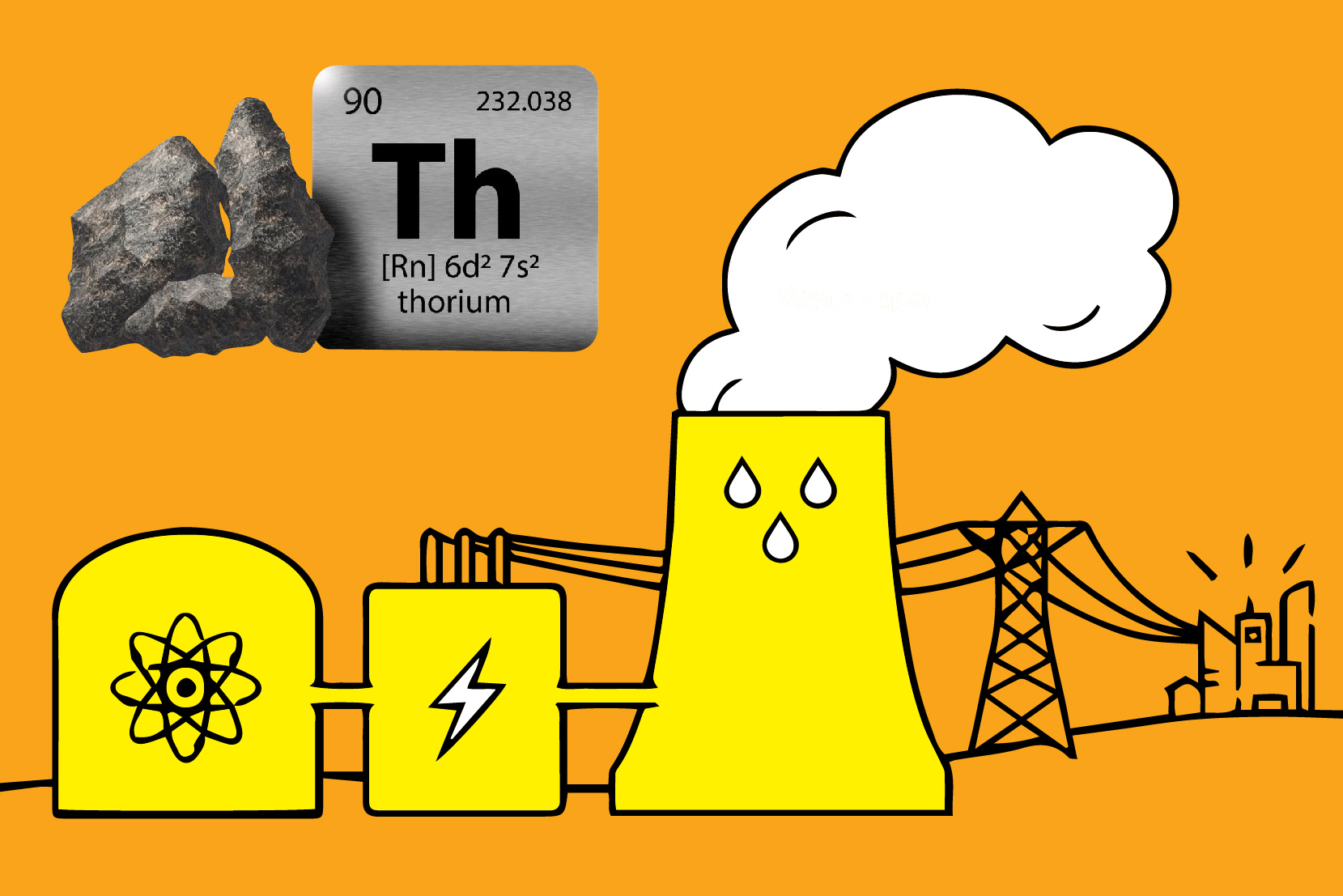
Technical and Regulatory Hurdles
Significant hurdles remain before thorium MSRs can scale to commercial viability. Processing thorium ore into reactor‑grade fuel incurs higher upfront costs than uranium enrichment, and the corrosion of containment materials by hot fluoride salts demands advanced alloys. China’s development of Hastelloy-N, a highly durable alloy, presents one solution, but it adds to capital expenditure. Moreover, regulatory frameworks in most countries are not yet equipped to license MSRs, prolonging deployment timelines. Without clear demonstrations of competitive levelised cost, targeted at or below USD 0.05 per kWh, the thorium MSRs may struggle to attract the large‑scale investment required for gigawatt‑scale roll‑out.
Emerging Thorium Efforts
Parallel efforts are emerging globally. Switzerland’s Moltex Energy plans a demonstration plant in 2026. India, home to the world’s largest thorium reserves, is advancing its own MSR designs, and U.S. startups such as Terrestrial Energy are pursuing licensing for small modular reactors. Should one or more of these initiatives succeed in proving economic and regulatory viability, a virtuous cycle of global investments, supply‑chain development, and cost reduction could follow, mirroring the trajectory of renewables over the past decade.
Without clear demonstrations of competitive levelised cost, targeted at or below USD 0.05 per kWh, the thorium MSRs may struggle to attract the large‑scale investment required for gigawatt‑scale roll‑out.
Geopolitical and Developmental Stakes
The broader geopolitical stakes are clear. Energy independence conferred by thorium reactors would reduce reliance on resource‑rich states, potentially reshaping alliances and trade patterns. For developing countries, cheaper nuclear baseload could underwrite industrialisation and electrification without the land‑use challenges of large‑scale solar or wind installations. Conversely, barriers to entry - technical, financial, and regulatory - could concentrate the benefits in the hands of technologically advanced nations unless knowledge and materials are broadly shared.
Future Outlook
China’s operational thorium reactor is more than a technical curiosity; it represents a nascent shift in the global energy order. If the technology scales economically and safely, the world may witness a transition from hydrocarbon‑dominated markets to a new era of nuclear innovation, one defined by abundant fuel, enhanced safety, and public‑sector leadership. Policymakers and industry stakeholders should monitor progress closely, adapt regulatory frameworks to accommodate MSRs, and consider collaborative research models that balance public interest with private‑sector agility. The coming decade will determine whether thorium fulfils its promise or remains an intriguing but niche side‑note in the annals of nuclear history.


%20Square%20Ad%20-11.jpg&w=640&q=75)
%20Horizental%20AD-01.jpg&w=3840&q=75)
