

in focus
As Bangladesh approaches a new fiscal cycle, policy shifts, productivity gains and private sector confidence will shape the next phase of growth.

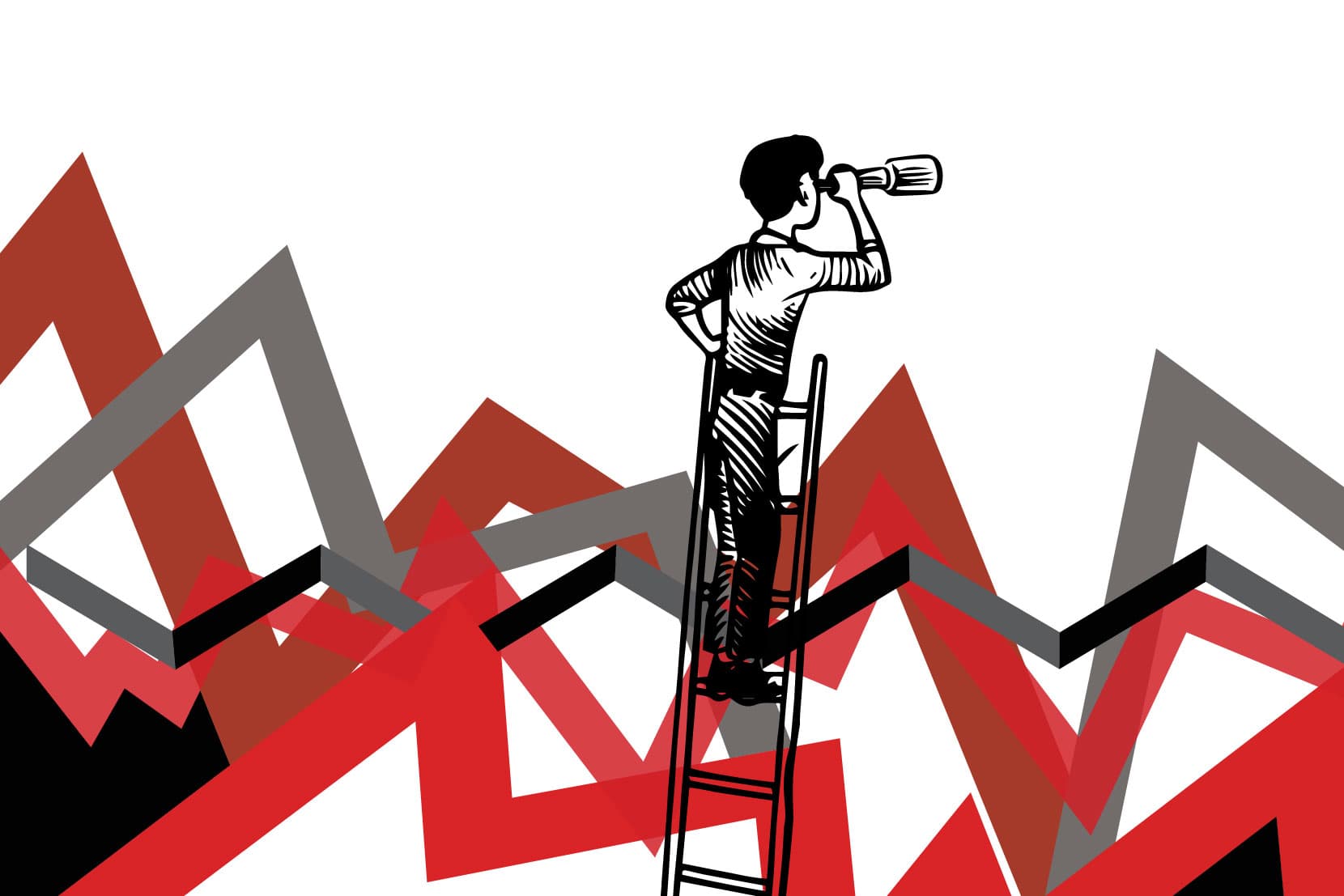
Illustrated By sk. yeahhia
1 April, 2026
Bangladesh enters 2026 at a moment of economic transition. After two decades of rapid expansion powered by export-led industrialisation, large-scale infrastructure investments and steady labour absorption, the country is approaching a new fiscal cycle while preparing for a historic milestone: graduation from the United Nations’ Least Developed Country (LDC) category. This convergence of structural change and policy transition raises a central question for policymakers and businesses alike: how should Bangladesh recalibrate its growth model for the next decade?
For much of the past twenty years, Bangladesh’s growth strategy was defined by expansion. Between 2010 and the mid-2020s the economy grew at an average annual rate of around 6%, making it one of the fastest-growing economies in South Asia. Exports expanded dramatically, rising from roughly USD 12.5 billion in 2010 to about USD 40 billion by FY2024, driven largely by the ready-made garment sector. Meanwhile, public investment in infrastructure accelerated. Bangladesh’s Annual Development Programme (ADP), the government’s main development spending vehicle, rose to over BDT 2.6 trillion in FY2024, financing megaprojects such as the Padma Bridge, Dhaka Metro Rail, and expanded port facilities.
These investments transformed connectivity, strengthened export logistics and helped sustain industrial growth. Yet as Bangladesh’s economy expands and becomes more complex, new structural pressures are emerging — pressures that require not a reversal of the growth model but a recalibration of its priorities.
THE EXPANSION ERA
The foundation of Bangladesh’s growth over the past two decades rests on three mutually reinforcing pillars: export-oriented manufacturing, infrastructure expansion, and labour-intensive industrialisation.
The ready-made garment sector remains the backbone of the country’s export economy, accounting for about 84% of total exports. This export success was supported by competitive labour costs, preferential trade access in major markets, and steady improvements in logistics and industrial capacity.
Infrastructure development also played a crucial role. The Padma Bridge, opened in 2022, is now entering what economists often call the “infrastructure dividend” phase. By connecting the southwest region to the national highway network, the bridge has significantly reduced travel times and improved access to Dhaka and Chattogram. Earlier economic assessments by the Asian Development Bank estimated that the project could raise Bangladesh’s GDP by around 1.2% in the long term through increased trade, regional investment and productivity gains. Urban transport improvements have also begun to reshape the economic landscape. The Dhaka Metro Rail system, inaugurated in phases beginning in 2022, is designed to ease congestion in one of the world’s most densely populated cities and improve urban productivity.
Together, these investments helped Bangladesh build the physical and industrial infrastructure necessary for sustained growth. However, the very success of this expansion phase has also revealed the limitations of a growth model that relies primarily on scale.

STRUCTURAL PRESSURES
As Bangladesh approaches middle-income status, structural weaknesses in the economic system are becoming more visible. One of the most persistent challenges is fiscal capacity. Bangladesh’s tax-to-GDP ratio remains among the lowest in the world, hovering around 7-8% according to the International Monetary Fund. Low revenue mobilisation limits the government’s ability to finance infrastructure, social services and climate adaptation investments without relying heavily on borrowing.
The financial sector also illustrates the structural adjustments facing Bangladesh’s economy. Data from Bangladesh Bank show that non-performing loans surged to BDT 64,400 million (about 35.7% of total loans) by September 2025, reflecting the disclosure of previously concealed defaults following stricter supervision. By December 2025, reported NPLs fell to BDT 5,570,000 million (30.6%) after an aggressive loan rescheduling programme introduced by the central bank. However, banks maintain provisions of only BDT 2,490,000 million against these defaults, leaving a provision shortfall of BDT 1,910,000 million - a gap analysts warn could pose risks to financial stability and depositors if underlying loan quality does not improve.
Inflationary pressures have also intensified. Bangladesh’s consumer inflation rose to 9.13% in February 2026, the highest level in ten months, driven largely by rising food prices and global supply disruptions linked to geopolitical tensions. With wage growth at 8.06 percent, real incomes continue to lag behind inflation, complicating monetary policy and increasing pressure on fiscal measures ahead of the new budget cycle. At the same time, Bangladesh’s impending graduation from LDC status in 2026 will gradually reduce preferential trade access in key markets, increasing competitive pressure on export industries.
These developments do not signal economic decline. Instead, they highlight the challenges typical of economies transitioning from rapid industrialisation to more complex, productivity-driven growth.
REFORM SIGNALS
In response to these pressures, Bangladesh has begun implementing a series of policy adjustments aimed at strengthening macroeconomic stability and institutional capacity. One of the most significant reforms involves exchange rate management. Bangladesh recently moved toward a more flexible exchange rate regime using a crawling peg system, replacing earlier administrative controls. The IMF notes that this reform aims to improve foreign exchange market stability and strengthen export competitiveness.
The country has also embarked on reforms in revenue administration. The government has proposed restructuring the National Board of Revenue to separate tax policy from tax administration, a step designed to modernise revenue collection and improve compliance. Financial sector reforms are also underway. Bangladesh Bank has initiated measures to strengthen bank supervision, improve loan classification standards, and encourage consolidation among weaker financial institutions.
These reforms form part of a broader effort to stabilise the macroeconomic environment and address structural weaknesses that emerged during the rapid expansion phase.
FISCAL POLICY
As Bangladesh prepares its FY2026-27 budget, fiscal policy will play a central role in determining how the country navigates the next phase of growth. The upcoming budget will also be the first full fiscal roadmap under the country’s new political administration following the recent transition, making it an important signal of how economic priorities may evolve in the coming years.
The government has set ambitious revenue targets under its Medium-Term Revenue Strategy, aiming to increase the tax-to-GDP ratio toward 10 percent over the medium term. Achieving this goal will require broadening the tax base, improving compliance through digitalisation, and reducing reliance on trade-related taxes. The upcoming budget will also need to balance development spending with fiscal discipline. Public investment remains essential for sustaining economic growth, but improving the efficiency of development projects is becoming increasingly important. For policymakers, the challenge is not simply increasing spending but ensuring that public investment generates measurable economic returns.
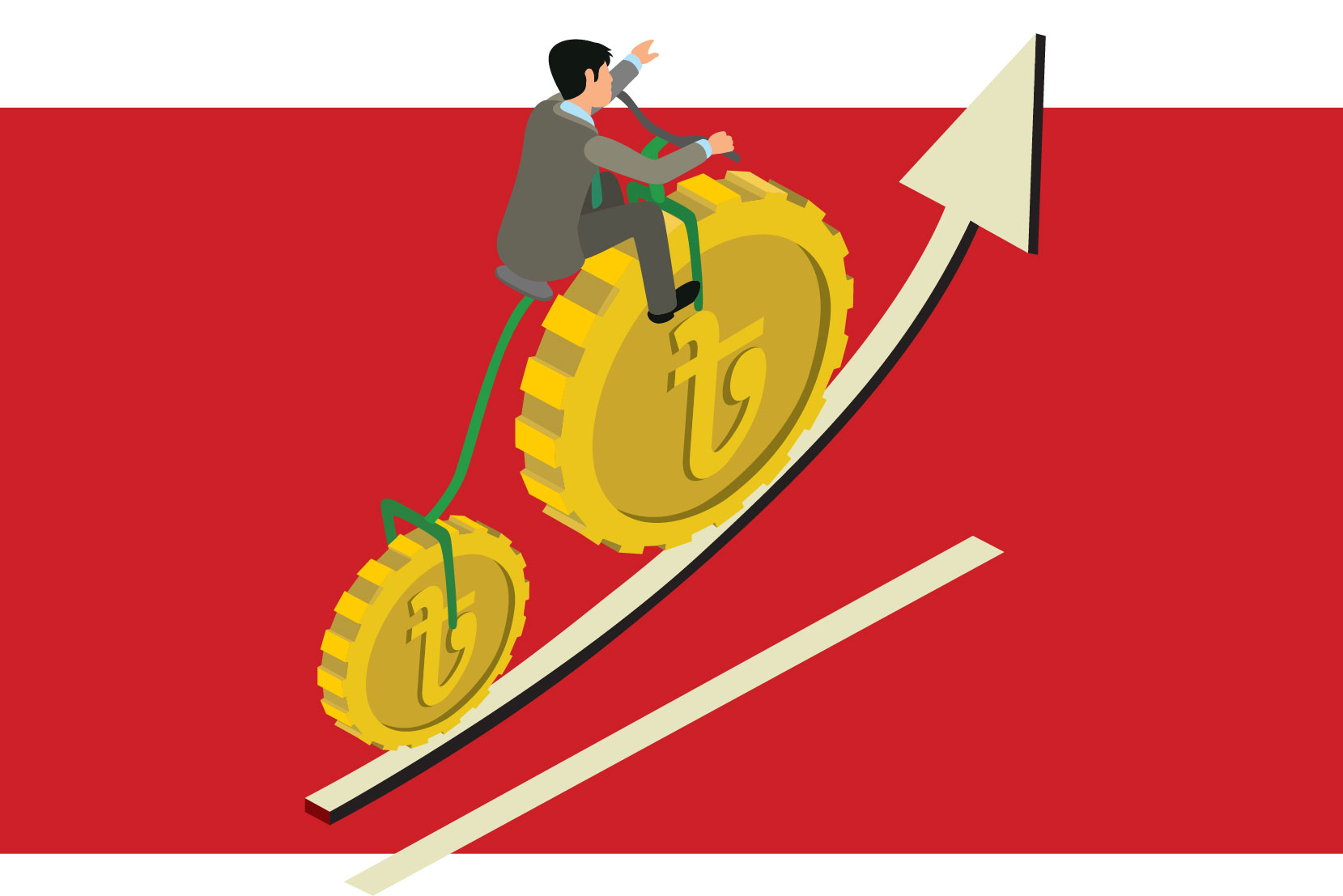
Illustrated By: Sk. Yeahhia
PRODUCTIVITY AND COMPETITIVENESS
As Bangladesh’s economy evolves, productivity will become an increasingly important driver of growth. The country’s early development strategy relied heavily on labour-intensive manufacturing. While this approach created millions of jobs and generated export revenue, productivity growth in many sectors remains relatively low compared with regional competitors. For instance, manufacturing productivity in countries such as Vietnam and China has grown significantly faster, allowing those economies to move more rapidly into higher-value industries. According to the Asian Development Bank, improving labour productivity, technological adoption and industrial upgrading will be essential if Bangladesh is to move up global value chains and sustain export competitiveness.
Export diversification is another critical issue. While the garment sector remains a powerful economic engine, analysts increasingly emphasise the need to expand exports in pharmaceuticals, information technology services, shipbuilding, and agro-processing.
Each year nearly two million young people enter Bangladesh’s labour market, highlighting the importance of creating higher-value employment opportunities. Investments in skills development, digital infrastructure and industrial upgrading will therefore play a key role in shaping the country’s long-term competitiveness.
THE INFRASTRUCTURE DIVIDEND
Bangladesh’s infrastructure investments are now entering what economists often describe as the “returns phase.” Projects such as the Padma Bridge and expanded port facilities have the potential to reduce logistics costs and stimulate industrial development in new regions. Meanwhile, initiatives such as the Bay Terminal project in Chattogram aim to improve port capacity and support growing trade volumes.
The effectiveness of these investments will depend heavily on private sector participation. Private investment currently stands at about 22% of GDP, according to the Bangladesh Bureau of Statistics. Improving regulatory predictability, strengthening financial governance and ensuring stable macroeconomic conditions will be critical for encouraging greater private investment.
These issues, from fiscal capacity to export diversification and financial sector reform, are increasingly shaping policy discussions among economists, business leaders and development institutions as Bangladesh prepares for its next phase of growth.
THE NEXT GROWTH CHAPTER
Bangladesh’s economic success over the past two decades has been built on expansion — expanding exports, expanding infrastructure, and expanding industrial capacity.
The next chapter of growth will require something different. It will require stronger fiscal institutions, more efficient financial systems, higher productivity, and greater export diversification. None of these changes represent a break from Bangladesh’s growth story. Instead, they represent its natural evolution as the country moves toward a more advanced stage of economic development. The upcoming fiscal cycle will offer the clearest signal yet of how Bangladesh intends to navigate this transition.
Recalibrating growth, in this context, does not mean abandoning the strategies that built the country’s economic momentum. It means refining them — so that Bangladesh’s growth model can sustain prosperity not just through expansion, but through efficiency, resilience and innovation in the years ahead.


%20Square%20Ad%20-11.jpg&w=640&q=75)
%20Horizental%20AD-01.jpg&w=3840&q=75)
