%20Square%20Ad-01.jpg&w=640&q=75)
%20Square%20Ad%20-02.jpg&w=640&q=75)
in focus
From antiquated regulations to persistent procedural hurdles, property succession seldom offers solace, burdening families with sorrow, uncertainty, and relentless administrative red tape.


Illustrated By sk. yeahhia
3 October, 2025
For numerous households in Bangladesh, the transfer of property often coincides with a time of sorrow. The passing of someone dear leaves behind an emotional void and, at the same time, initiates a multifaceted legal journey. Inheritance is not something encountered every day; for most, it is an experience faced only once or twice throughout their lives. Unawareness of the rules and regulations leaves families vulnerable to the bureaucracy, unexpected expenses, and unlawful practices. The path is riddled with challenges, from old, outdated laws to the burdens of court fees and the shadow of bribery.
For numerous households in Bangladesh, the transfer of property often coincides with a time of sorrow. The passing of someone dear leaves behind an emotional void and, at the same time, initiates a multifaceted legal journey. Inheritance is not something encountered every day; for most, it is an experience faced only once or twice throughout their lives. Unawareness of the rules and regulations leaves families vulnerable to the bureaucracy, unexpected expenses, and unlawful practices. The path is riddled with challenges, from old, outdated laws to the burdens of court fees and the shadow of bribery.
FAITH OVER FAIRNESS
In Bangladesh, there exists a lack of a cohesive inheritance law. Succession is governed by personal laws that have their origins in colonial statutes. The Muslim Personal Law (Shariat) Application Act of 1937 outlines specific inheritance shares for Muslims. A widow is entitled to one-eighth of her husband's estate when there are children, and one-quarter if there are none. Conversely, a widower inherits one-quarter if children are present, or one-half in their absence. Typically, daughters receive fifty percent of what sons inherit.
Hindus adhere to the Hindu Women’s Rights to Property Act of 1937 and the Hindu Law of Inheritance (Amendment) Act of 1929, which allow daughters and granddaughters to inherit their mother’s stridhan - property that she acquired or received as a gift. The Succession Act of 1925 encompasses Christians, Buddhists, and various other minority groups.
These laws codify inequalities. A 2025 study by Counterpoint revealed that merely 10% of land is owned by women, while joint ownership stands at a mere 2%. A mere 8.5% of women possess land, in stark contrast to 52.3% of men. Although the law presumes that men are responsible for supporting women, there is no actual requirement, and numerous brothers exert pressure on their sisters to relinquish their rights. The perception of these laws as sacred leads to pushback from traditionalist factions and male beneficiaries who stand to gain from the status quo.
The government’s digitalisation of land services promised to eliminate middlemen and corruption. Yet, field reports reveal frequent server crashes, vanished receipts, and poorly trained staff.
PROPERTY DENIED, POWER RETAINED
The outcome is stark. The Business Standard (2025) reported that women account for only 4% of landowners, with many widows surrendering rights to maintain kinship ties. Informal forums (shalish) often override formal laws, pushing women to accept token sums or nothing at all.
A Badabon Sangho survey across 12 districts found 74% of women landowners inherited land, yet 52.6% faced hurdles from a lack of information, 33.2% experienced gender-based violence, and 86% lacked land literacy. Denying property leaves women without collateral for loans, rental income, or old-age security.
Courts sometimes intervene. In December 2022, the Appellate Division ruled that a granddaughter could inherit her grandmother’s stridhan, affirming daughters and granddaughters as rightful heirs. But such rulings are rare, and enforcement, weak. As sociologist Anu Muhammad notes, the assumption that men provide is eroding as women increasingly work, yet inheritance rights remain largely theoretical. Many widows or divorcees risk social ostracism if they claim their shares.
UNPACKING THE BUREAUCRACY
Before claiming property, heirs must prove legitimacy. The first step is a Warisan (inheritance) certificate from the ward councillor or union parishad. Though available online via prottoyon.gov.bd, many rural families still queue at local offices.
For movable assets like deposits or shares, heirs need a succession certificate from a district judge. Required documents include NIDs, photographs, the deceased’s death certificate, bank statements, and the Warisan certificate. Court fees vary: claims up to BDT 20,000 are exempt; BDT 20,000 to 100,000 incur 1%; above BDT 100,000 pay 2%. With only one Dhaka court handling petitions, delays are common, forcing many to hire lawyers, adding several thousand taka in costs.
For land, the main hurdle is mutation (namjari) - updating records to reflect new ownership. Applications must include the Warisan or succession certificate, death certificate, khatian (Record of Rights), and tax receipts. Though designed to take 36 days and available online via land.gov.bd, the process is plagued with failures.
A 2023-24 Business Standard investigation found frequent malfunctions in the Land Management Automation Project: servers crashed, applications stalled, and staff redirected applicants offline. One resident described repeated “system errors” when paying land tax, forcing him to negotiate with staff and wait an extra 15 days. While the government promises approvals within 15 days, only 69% of cases are cleared in a month, and over 15% face longer delays.
DIRECTIVES, STILL DELAYS
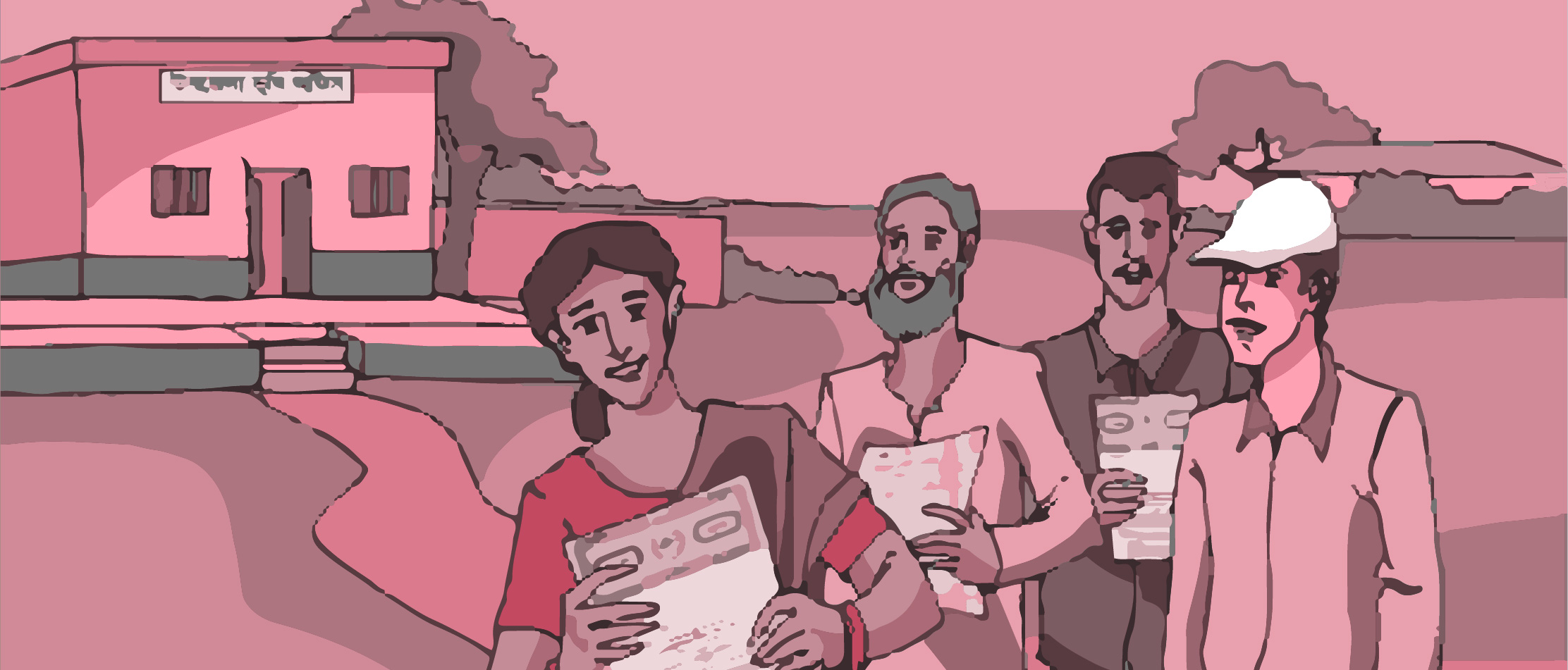
In February 2025, the Ministry of Land issued a circular clarifying that heirs can apply for joint mutation. Local land offices must not reject such applications on the grounds that no distribution deed exists; one application listing all heirs and shares is enough. While the directive aimed to reduce harassment, many local offices still demand distribution deeds, forcing heirs to return repeatedly. Without oversight, progressive circulars risk becoming symbolic.
DIGITAL DREAMS VS REALITY
The government’s digitalisation of land services promised to eliminate middlemen and corruption. Yet, field reports reveal frequent server crashes, vanished receipts, and poorly trained staff. Citizens often turn to unofficial agents to submit online forms, effectively paying twice - once to the portal, once to brokers. As The Business Standard noted, partial automation risks creating “a new bureaucratic labyrinth.” For heirs unfamiliar with technology, glitches translate into lost workdays, travel expenses, and mounting anxiety.
PAYING TO CLAIM WHAT’S YOURS
Corruption remains endemic. A 2023-24 TIB survey found 70.9% of households faced corruption in public services, with land offices the worst: 51% reported corruption and 32.3% paid bribes. The average bribe was BDT 11,776; total bribes across sectors reached BDT 10,902 crore, 1.4% of the national budget.
On the ground, heirs describe routine extortion. Officials often claim khatian numbers do not match, then send heirs to deed writers who act as brokers. These intermediaries collect “speed money,” share it with officials, and move files forward. Those who refuse face indefinite delays or risk losing land.
Victims include widows, orphans, and migrant workers. One elderly woman told Observerbd.com she visited the registry office multiple times with her grandson, only to be told her papers were inconsistent. Asked for a bribe, she eventually gave up, forfeiting her rightful share. Without digital end-to-end records and audits, manual loopholes sustain this corruption.
On the ground, heirs describe routine extortion. Officials often claim khatian numbers do not match, then send heirs to deed writers who act as brokers. These intermediaries collect “speed money,” share it with officials, and move files forward.
JUSTICE IN WAITING
For heirs who fight back, the courts present another obstacle. As of 2024, Bangladesh’s judiciary faced 4.2 million pending cases, many involving land disputes. One case filed in 1998 remained unresolved for 25 years.
Litigation drains families financially and emotionally. Each hearing requires travel, lawyer fees, and repeated adjournments. Though digital case management exists in Dhaka and a few districts, most courts still rely on paper, causing lost files and chronic delays. Succession petitions in Dhaka’s only jurisdictional court pile up, leaving heirs in limbo. For rural families, hiring city lawyers and covering travel costs is often prohibitive.
THE UNTAXED FORTUNE
In May 2024, the Centre for Policy Dialogue proposed collecting BDT 6,000 crore through a wealth tax, including inheritance. Property tax contributes only 0.34% of revenue, compared to 5.6% in OECD countries. Advocates argue that taxing large inheritances could reduce inequality, but critics fear it would push heirs into informality. Experts suggest strengthening property tax enforcement and transparency first.
TOWARDS AN INHERITANCE OF PEACE
To transform inheritance from a source of conflict into closure, Bangladesh must reform on several fronts:
Law reform and gender equity: Harmonise personal laws with constitutional equality. Women should inherit equal shares, supported by public campaigns encouraging registration in women’s names.
Transparent, user-friendly administration: Fully implement the Land Ministry’s circular on joint mutation. Land offices should display service fees, checklists, and timelines, with inspections and audits deterring bribery.
Robust digital infrastructure: Digitalisation must include training, budgets for maintenance, and backup systems. Integrated cadastral maps and SMS updates can reduce tampering.
Accessible legal aid: Expand free or subsidised legal support for widows, orphans, and low-income heirs. Alternative dispute resolution, such as mobile courts, can reduce court backlogs.
Awareness and education: Public campaigns via radio, TV, and social media should explain inheritance steps, warn against middlemen, and highlight women’s rights. Training shalish committees and religious leaders could align customs with law.
Inheritance should pass on wealth, but in Bangladesh, it often transfers frustration, expense, and injustice. Gender-biased personal laws restrict women’s rights; bureaucracy and weak digital systems prolong delays; corruption forces heirs to pay for what is theirs; and court backlogs drag disputes into decades. Unless policymakers act, inheriting property will remain an “inheritance of loss.” Through law reform, transparent administration, robust digitalisation, legal aid, and public education, Bangladesh can make inheritance a process that restores, rather than erodes, the peace of mind of grieving families.

%20Square%20Ad%20-10.jpg&w=640&q=75)
%20Square%20Ad%20-11.jpg&w=640&q=75)
%20Horizental%20AD-01.jpg&w=3840&q=75)
