

sdg spotlight
Marina Tabssum Architects' Khudi Bari demonstrates how low-cost, movable, and climate-adapted homes can provide safety, dignity, and lasting impact for vulnerable populations.

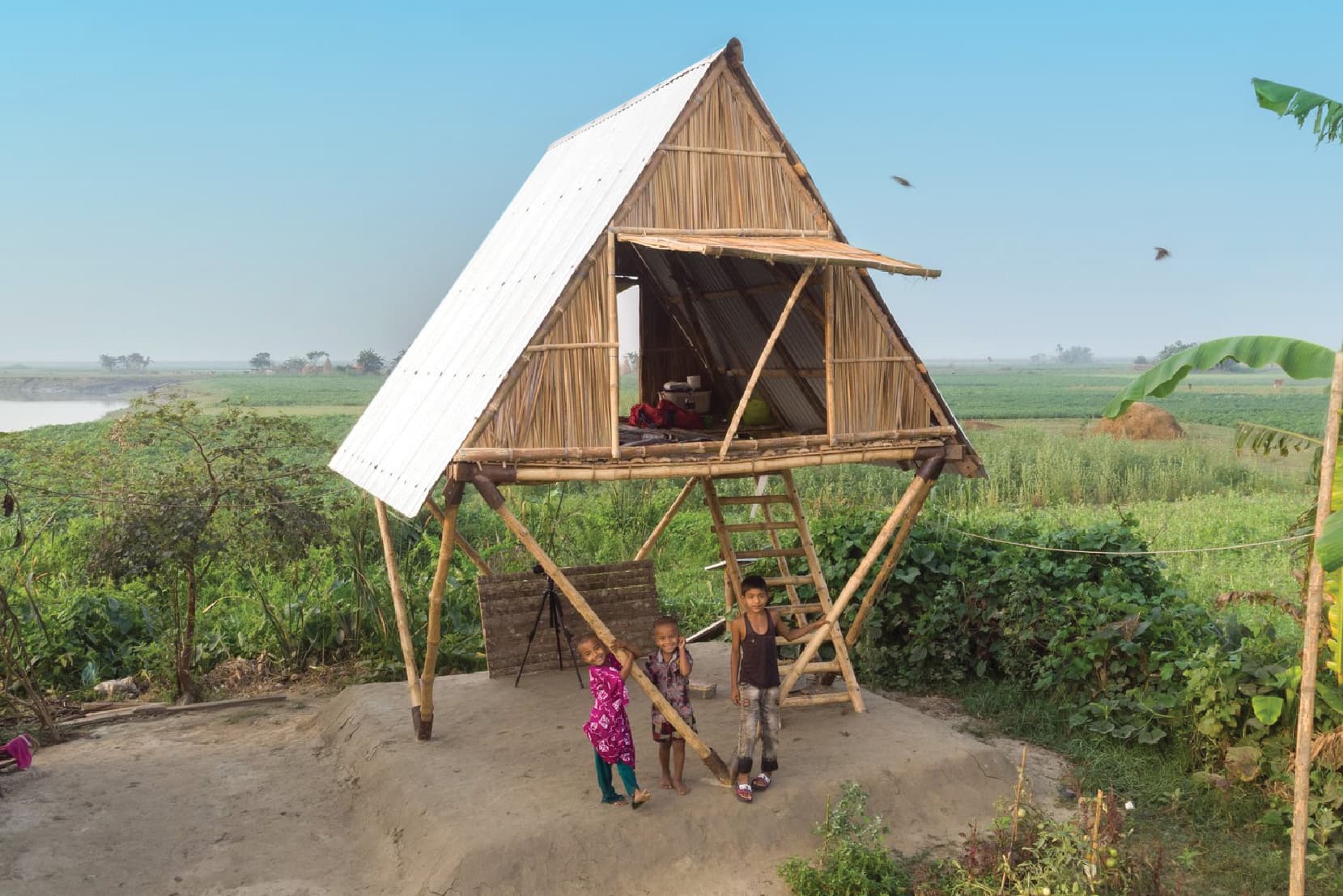
Photograph collected
3 October, 2025
Access to housing is a basic human right. And yet, according to the SDG Report 2025, some 3 billion people across the world struggle to afford it. With global conflict and the climate crisis driving these alarming numbers up, projects like the Khudi Bari by Marina Tabassum, and her firm Marina Tabassum Architects (MTA), provide a ray of hope.
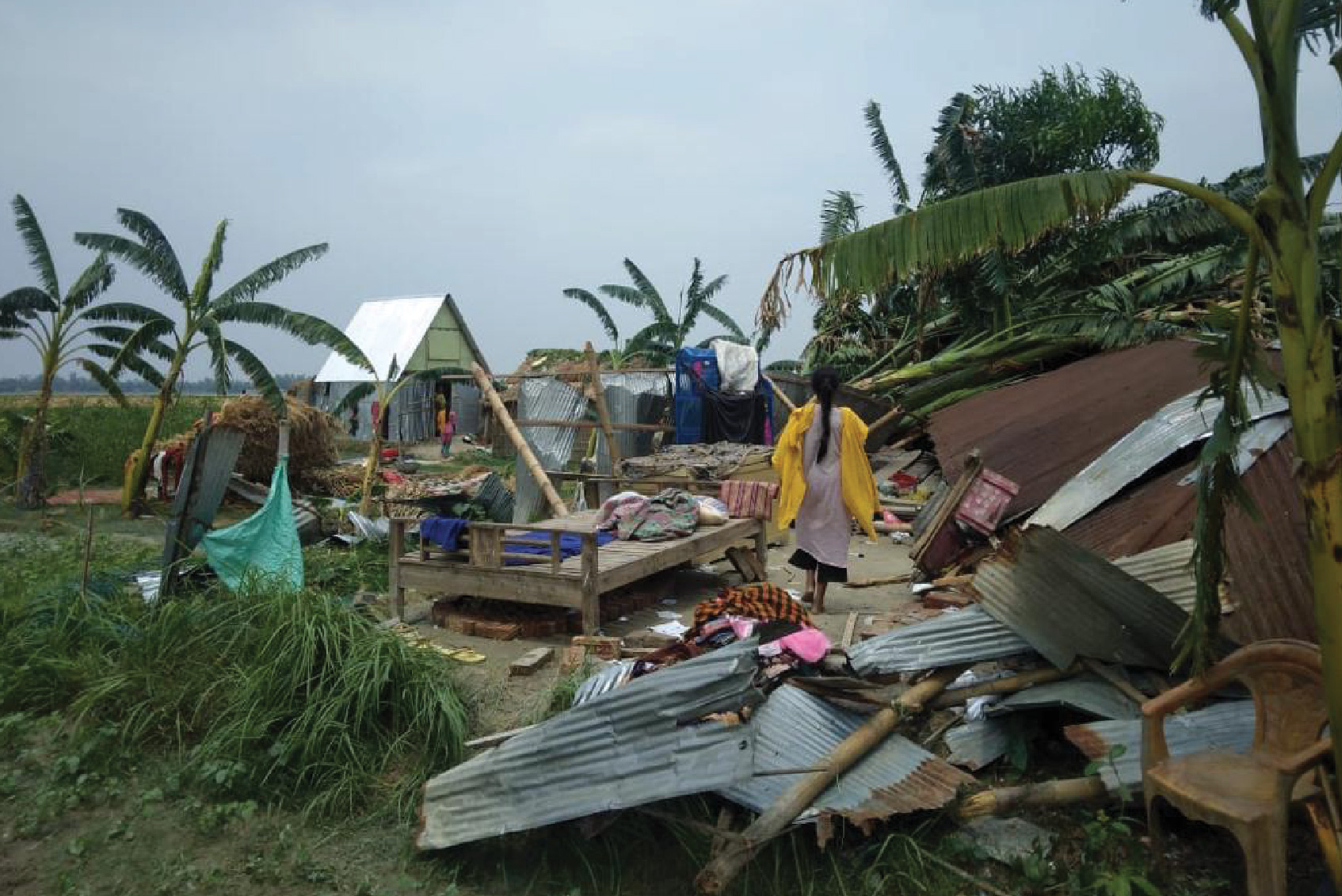
As global temperatures continue to rise, we’re seeing more extreme weather - forest fires, storms, droughts and floods at unprecedented levels, causing disruptions in agricultural patterns, and large-scale displacements of population. Low-lying coastal countries like Bangladesh are particularly vulnerable to the ravages of the climate crisis.

There are several problems to be solved here: the need for affordable and resilient housing stock, the need to conserve arable land, as well as the need to reduce post-disaster rural-urban migration. The Khudi Bari, an award-winning modular structure developed by Architect Marina Tabassum during the COVID years, following the research led by her firm Marina Tabassum Architects (MTA), addresses these issues head-on. The design, formulated through extensive consultation with the community members of the affected areas, is a flexible, affordable, self-build housing solution adapted to their needs.
THE KHUDI BARI AT A GLANCE
Putting a local twist on the “tiny house” concept, the space frame structure of the Khudi Bari is built with structural bamboo and steel joints specially fabricated at a Dhaka foundry to facilitate assembly and disassembly in a short period of time and can be moved to safer locations in times of crisis. The upper storey, essential to ensure storage and sleeping space even during floods, has front and rear openings for cross ventilation. The roof is of corrugated tin produced in Chittagong - chosen by the community in preference over thatch, for its durability and reusability. Wood-framed panels are provided for the upper facade, while the lower walls are left to the owner-users’ initiative: from grasses or sticks to jute fabric or salvaged corrugated metal sheets.
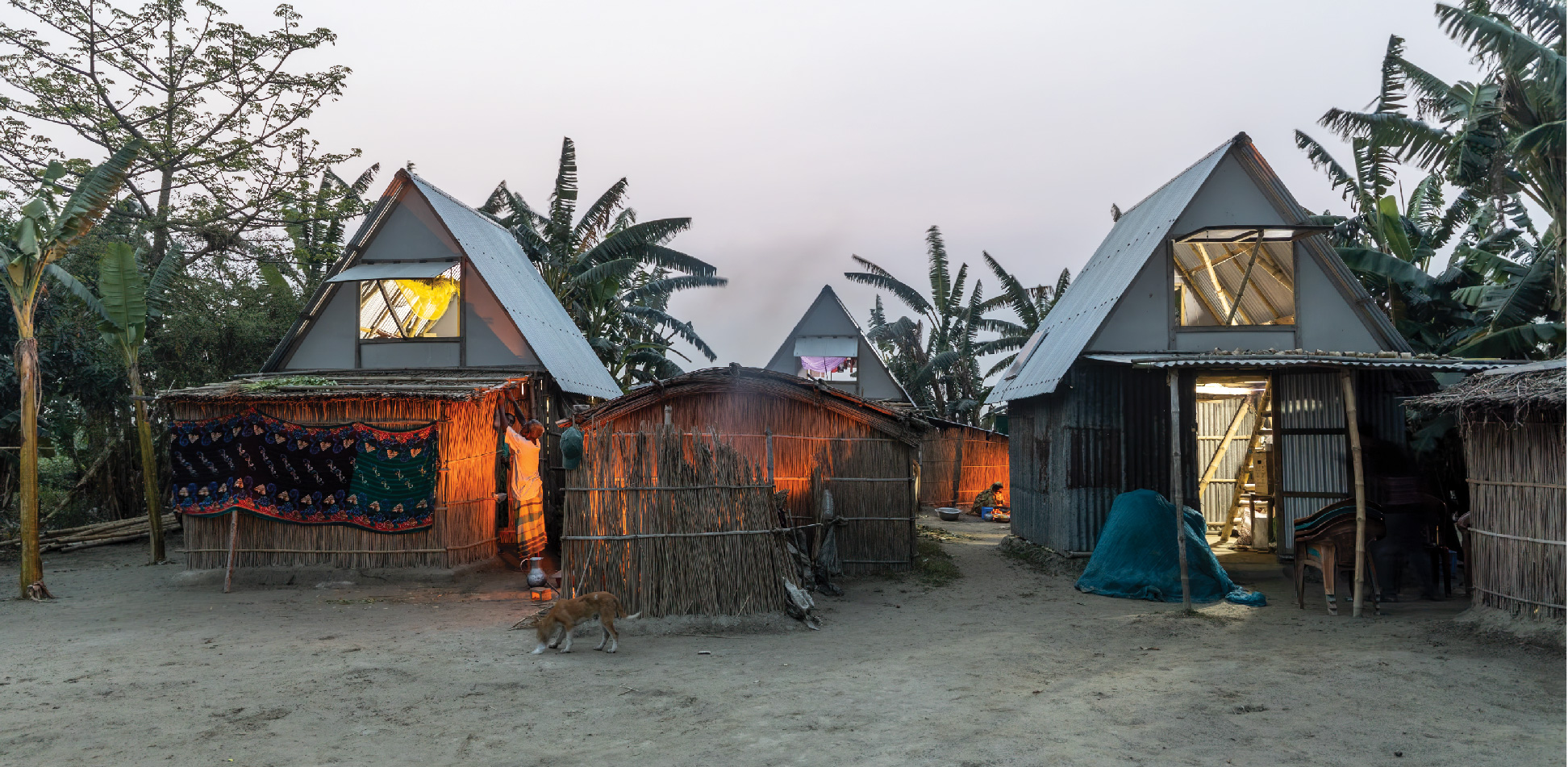
Photograph by City Syntax
WHAT WORKS
Use of locally sourced construction materials reduces the cost and carbon footprint; the basic Khudi Bari kits cost the equivalent of only USD 450 - a fraction of the roughly USD 2,500 starting price of commonly available wooden prefabricated houses already being produced in Dhaka.
MTA established the non-profit Foundation for Architecture and Community Equity (FACE) to facilitate the take-up of the Khudi Bari. By early 2025, over seventy-eight structures had been erected at various locations. Owners attest that they fulfil their promise of being buildable within three days and dismantlable within three hours. Some have already withstood several cycles of flooding and/or removal to new sites. Based on these promising results, MTA have also successfully scaled up the modular system to create several striking and thoughtfully designed women-led or women-oriented facilities in Bangladesh’s vast Rohingya refugee camps, whose predominantly Muslim communities have fled persecution in neighbouring Myanmar. The fast-growing and abundantly available bamboo for the structures is treated in the char communities by soaking in water for twenty-four hours. In the Rohingya camps, it is treated with borax and boric acid to protect against fungal decay and insect infestation in a special facility created by the International Organisation for Migration (IOM).
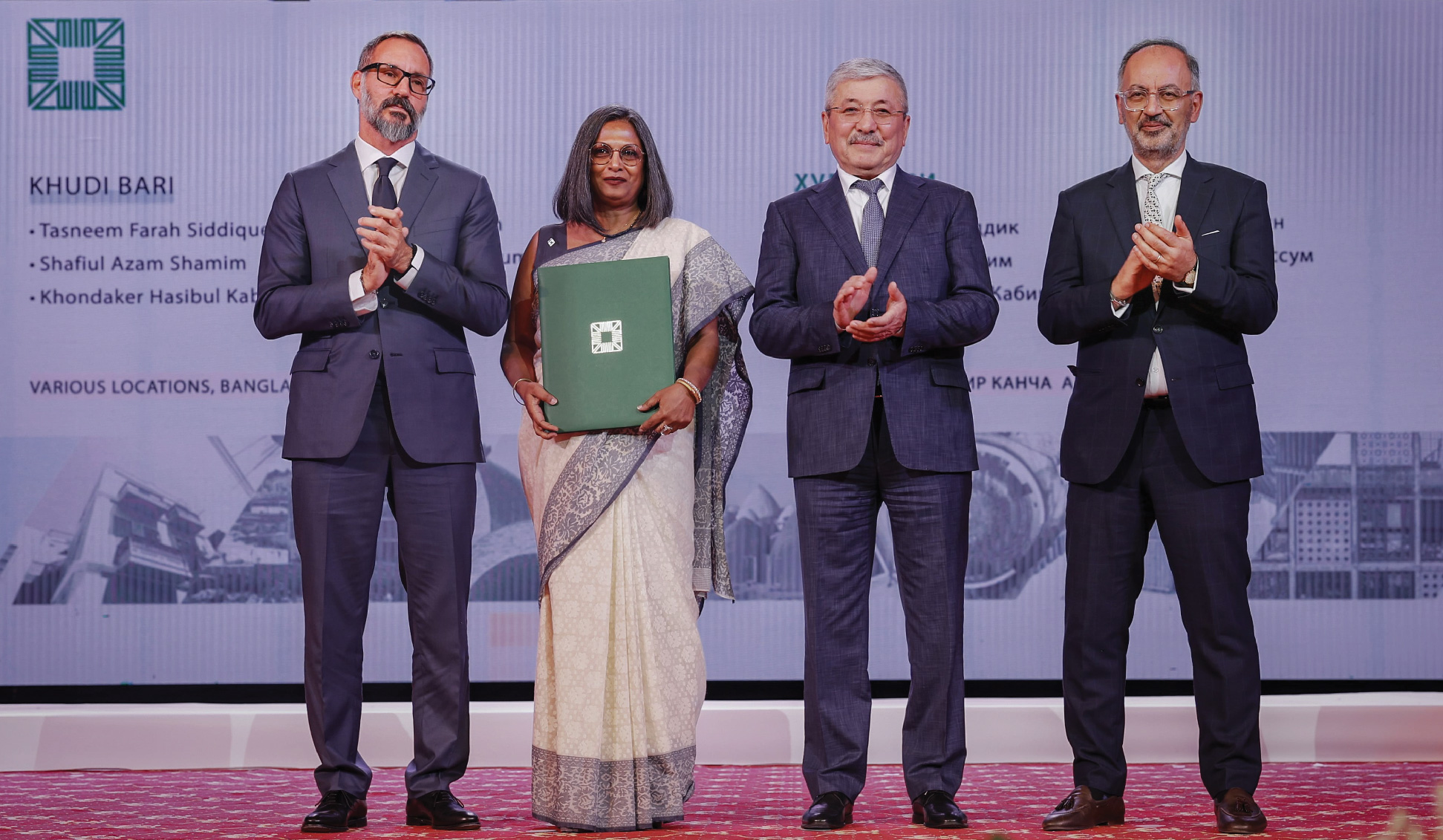
Marina Tabassum Architects' "Khudi Bari" received the 2025 Aga Khan Award for Architecture.
Photograph by Akbar Hakim
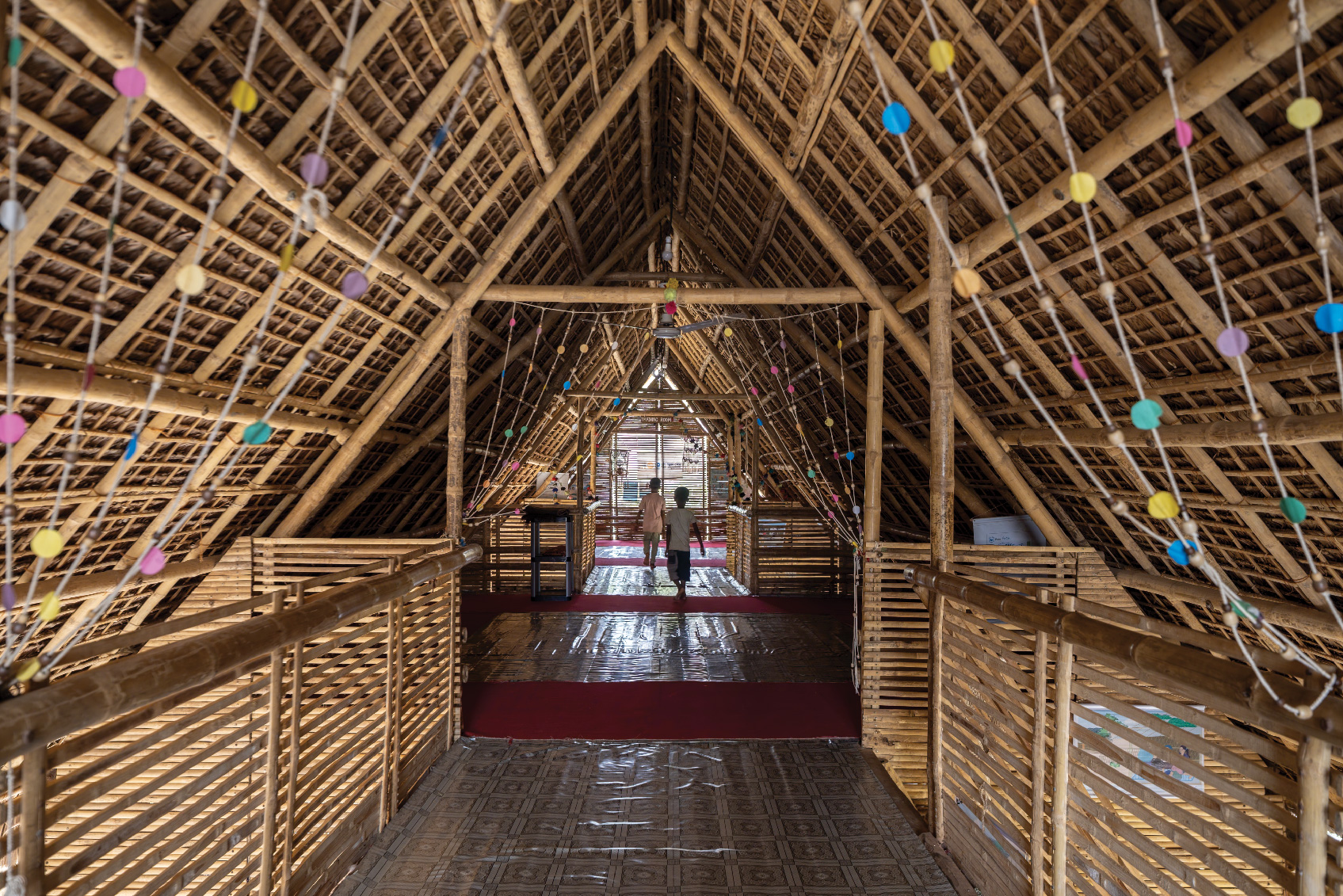
Photographs by City Syntax
SOLVING PROBLEMS ACROSS THE BOARD
There are many benefits to what, at first glance, looks like a staggeringly simple design. Pairing elementary geometry with vernacular bamboo techniques honours the traditions of the communities the project has been created for. The open-source use enables communities to build and localise without external intervention, and the ease with which each of these structures can be erected and dismantled provides an engaging solution for the nomadic condition of climate-displaced communities, reducing the time it takes to adapt to ever-changing topography that bears the brunt of climate change.
The flexibility and open-endedness of the design have also demonstrated its scalability, going from a single unit into collective communal buildings, widening its impact from personal dignity to social infrastructure. There is scope to provide these communities with resources such as classrooms, community kitchens, and humanitarian aid centres, allowing for meaningful, sustainable impact.
In addition, the project’s contribution to the global advancement of bamboo, a living, widely available regenerative source, provides the Global South with a scalable, sustainable solution to their housing needs, a core tenet for SDG 11 - Sustainable Cities and Communities.
The Khudi Bari Project was awarded the 2025 Aga Khan Award for Architecture. Jury citation for the award states, “The Khudi Bari project has been granted the Award for developing a flexible system that addresses global challenges with vernacular solutions, reframed through a contemporary lens to evolve and scale up so as to deliver a wider, regional impact.”


%20Square%20Ad%20-11.jpg&w=640&q=75)
%20Horizental%20AD-01.jpg&w=3840&q=75)
