

in focus
Inside the education vision of Tajdin Hassan, COO of Keeron, and Rhidita Tasnim, Instructor and Franchisee of Kumon Gulshan Center — a story of leadership and learning as they redefine modern education, transform Bangladesh’s learning culture, and reshape academic excellence and digital upskilling.

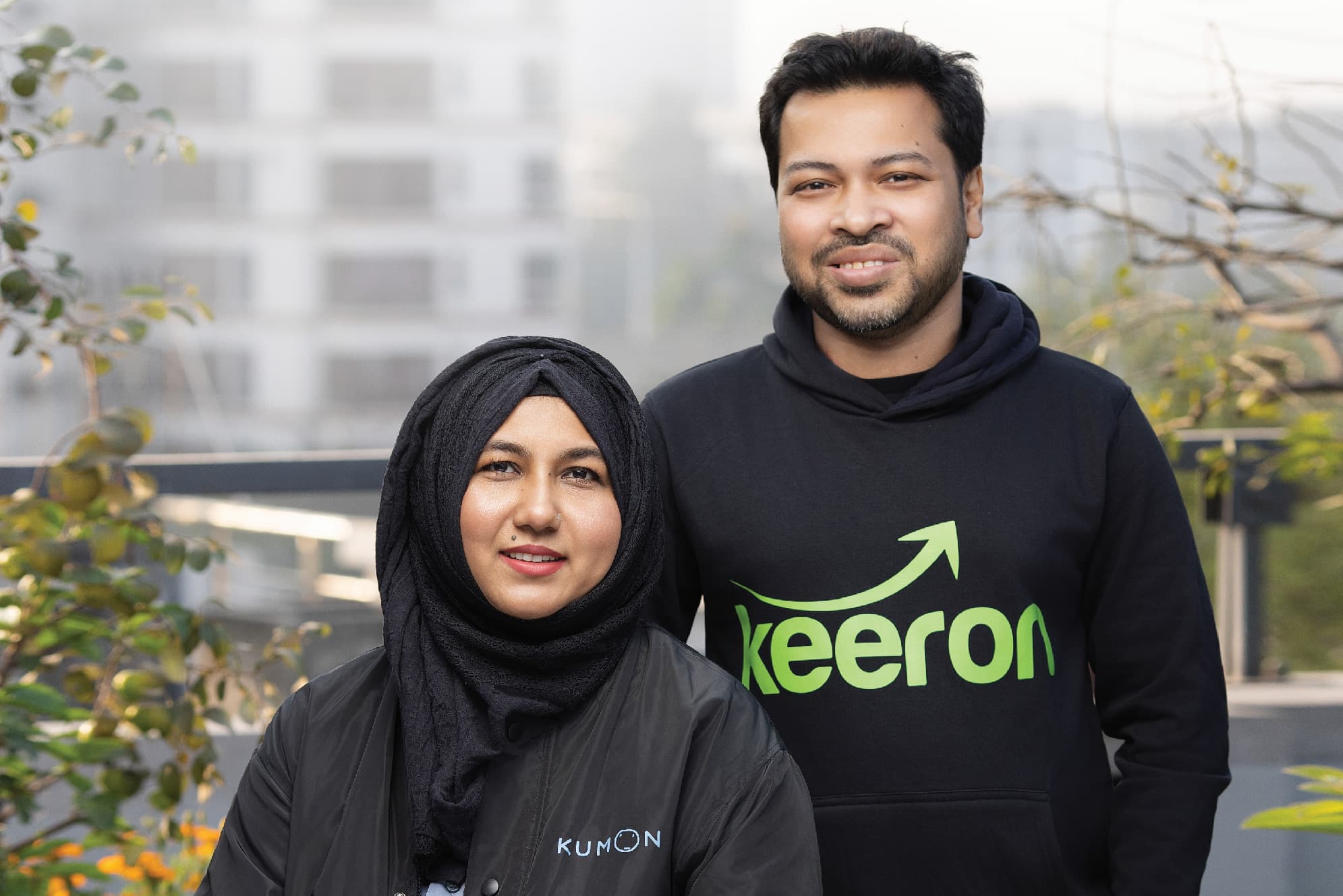
Photograph by zia uddin
1 February, 2026
It might seem that Tajdin Hassan and Rhidita Tasnim appear to be working at opposite ends of Bangladesh’s education spectrum. While Tajdin is shaping industry-ready professionals through digital upskilling and workforce development, Rhidita is building academic discipline and confidence in children, one worksheet at a time. Yet their journeys run in parallel — distinct in form, deeply connected in purpose.
Tajdin Hassan, Chief Operating Officer (COO) of Keeron and Chief Business Officer (CBO) at The Daily Star, operates in the high-pressure worlds of media, startups, and strategy, focusing on employability and future-ready skills. Rhidita Tasnim, Instructor and Franchisee of Kumon Gulshan Center, works at the foundational stage of learning, nurturing independence, consistency, and mastery in young minds.
Together, they represent a complete learning lifecycle — from early cognitive discipline to professional reinvention. Bound by a shared belief that education is the most powerful engine of human transformation. Their entrepreneurial work converges on a single mission: empowering individuals to take control of their learning, and in doing so, shaping a more capable, confident, and competitive Bangladesh.
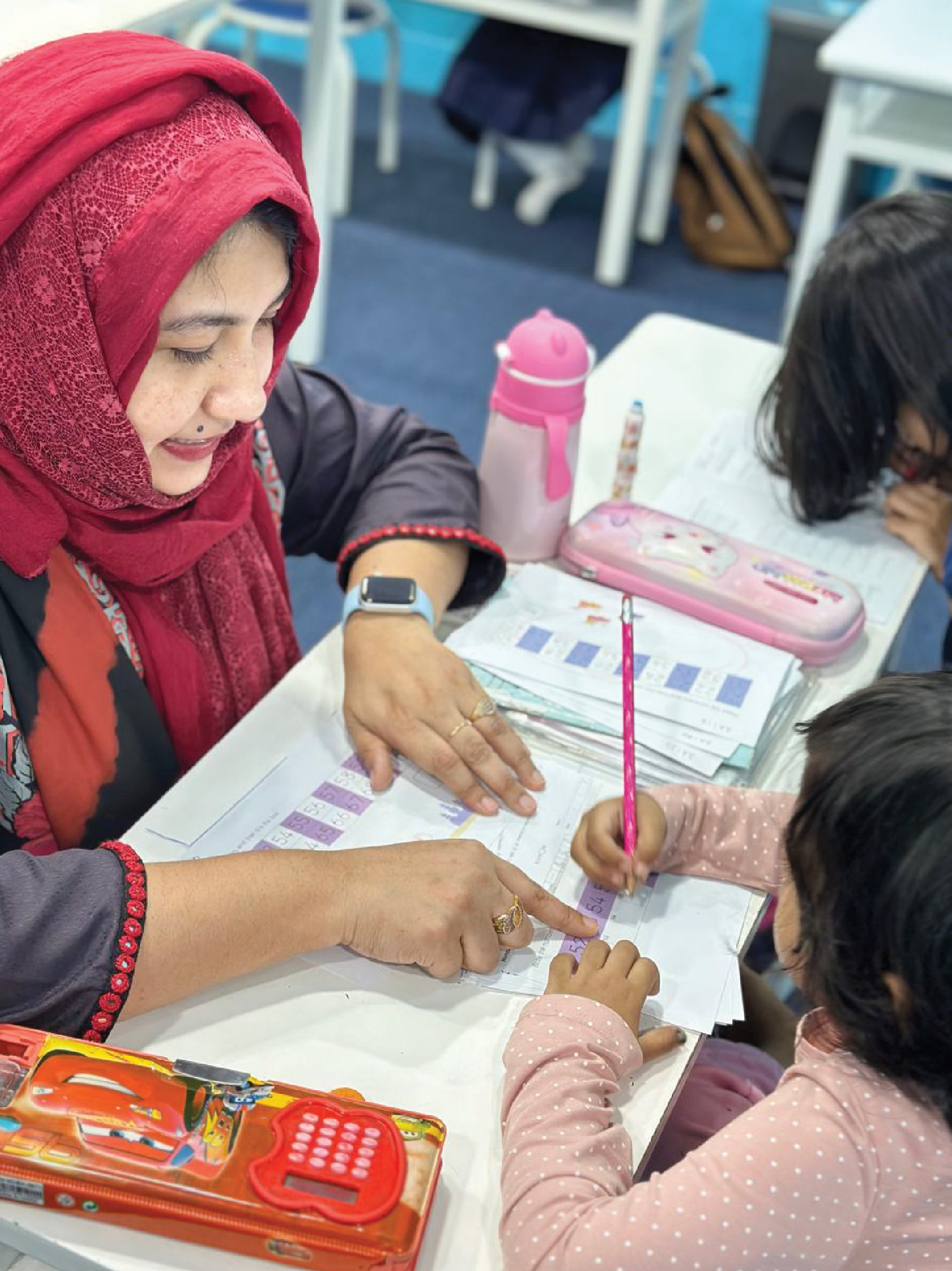
Photograph: Courtesy of Tajdin Hassan
The Beginning: Two Different Paths to One Shared Vision
Rhidita Tasnim’s journey began inside a classroom. As a school teacher, she witnessed firsthand how traditional systems often limit both students and educators. While she valued the intimacy of teaching, she felt constrained by scale. Her motivation to become an entrepreneur did not come from a desire to leave education, but from the urge to expand its reach. She wanted to retain the essence of quality teaching while creating impact beyond a single classroom — an impact that could grow, multiply, and sustain itself.
That search for scalable yet meaningful education led her to Kumon, a global learning method rooted in self-learning, repetition, and mastery. What appealed to Rhidita was not just the brand, but the philosophy. Kumon aligned seamlessly with her belief that children thrive when they are taught how to learn independently rather than spoon-fed answers. For Rhidita, becoming a franchisee was a long-term commitment to shaping learning habits at their most formative stage.
Tajdin Hassan’s path was shaped by a different set of pressures and possibilities. Drawn early on to leadership roles, he viewed corporate life not as a ladder of titles, but as a platform for responsibility. His motivation stemmed from the ability to influence systems, shape culture, and create impact at scale. Armed with this powerful philosophy, he naturally felt at home at The Daily Star, an institution that stands at the intersection of media, business, and nation-building. As its CBO, Tajdin gained a macro-level understanding of Bangladesh’s economic realities — its demographic potential, its skills gaps, and its systemic inefficiencies.
That vantage point eventually pulled him toward entrepreneurship, specifically EdTech. For Tajdin, education represented the highest-impact sector, and technology offered the speed and scale Bangladesh urgently needed. Keeron was born from this realisation: a startup designed to democratise access to industry-relevant skills and convert youthful ambition into employable capability.
Though their paths differed — one rooted in early learning, the other in professional upskilling — they organically converged around a single idea: empowering learning at every stage of life. Rhidita builds the foundation; Tajdin shapes the outcome. Together, they form two ends of the education spectrum.
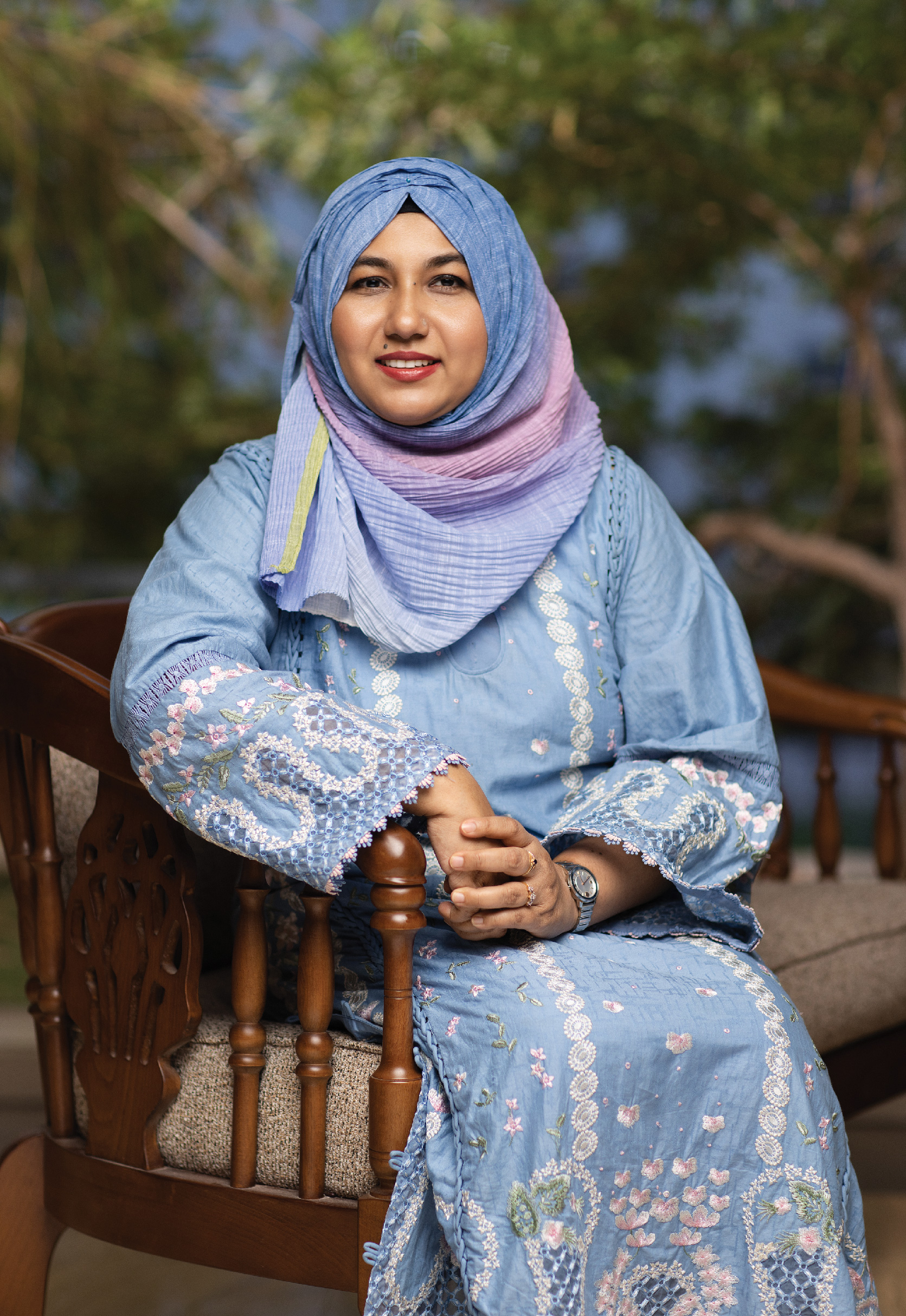
Rhidita Tasnim, Instructor and Franchisee of Kumon Gulshan Center | Photographs by Zia Uddin
Building Kumon Gulshan Center: A Mother, Educator, and Entrepreneur
Entrepreneurship unfolded alongside motherhood for Rhidita, adding another layer of complexity to her journey. Balancing these roles demanded intention, careful planning, clear prioritization, and a strong support system. She learned to remain fully present, whether guiding a child through a worksheet or nurturing her own family.
For Rhidita, choosing Kumon was a deliberate decision. The method’s emphasis on self-learning resonated deeply with her educational philosophy. At Kumon Gulshan Center, the goal was never to rush results, but to build confidence through consistency. Growing the franchise from scratch meant earning parent trust one student at a time. Rhidita stayed deeply involved in every child’s progress, ensuring personalised attention and measurable outcomes.
The journey was not without resistance. As a woman entrepreneur in education, she initially faced challenges around credibility and perception. Balancing multiple roles while asserting professional authority required resilience. Over time, results spoke louder than scepticism. Consistent learning outcomes and visible student growth gradually dismantled barriers.
Her leadership philosophy reflects this experience. She leads with empathy, discipline, and accountability — qualities she believes are essential when shaping young minds. For Rhidita, leadership is not about control, but about creating an environment where children learn to trust themselves.
Inside the Kumon Method: Discipline, Independence & Mastery
Kumon’s impact lies in building good habits. Through daily practice and structured progression, students develop discipline and problem-solving skills that extend beyond academics. Rhidita has witnessed remarkable transformations — especially among shy students who, over time, gain confidence and begin outperforming their grade level.
Parent testimonials emerge organically. As parents observe their children becoming more independent and consistent, feedback flows naturally. These quiet validations have helped Kumon Gulshan Center grow into one of the fastest-expanding branches in the region, aided by disciplined operations, strong parent trust, and a location that serves a diverse learning community.
Looking ahead, expansion is firmly on the agenda. Rhidita envisions a larger centre, strengthened quality controls, and structured programs that respond to evolving learning needs without compromising the Kumon method’s core principles.
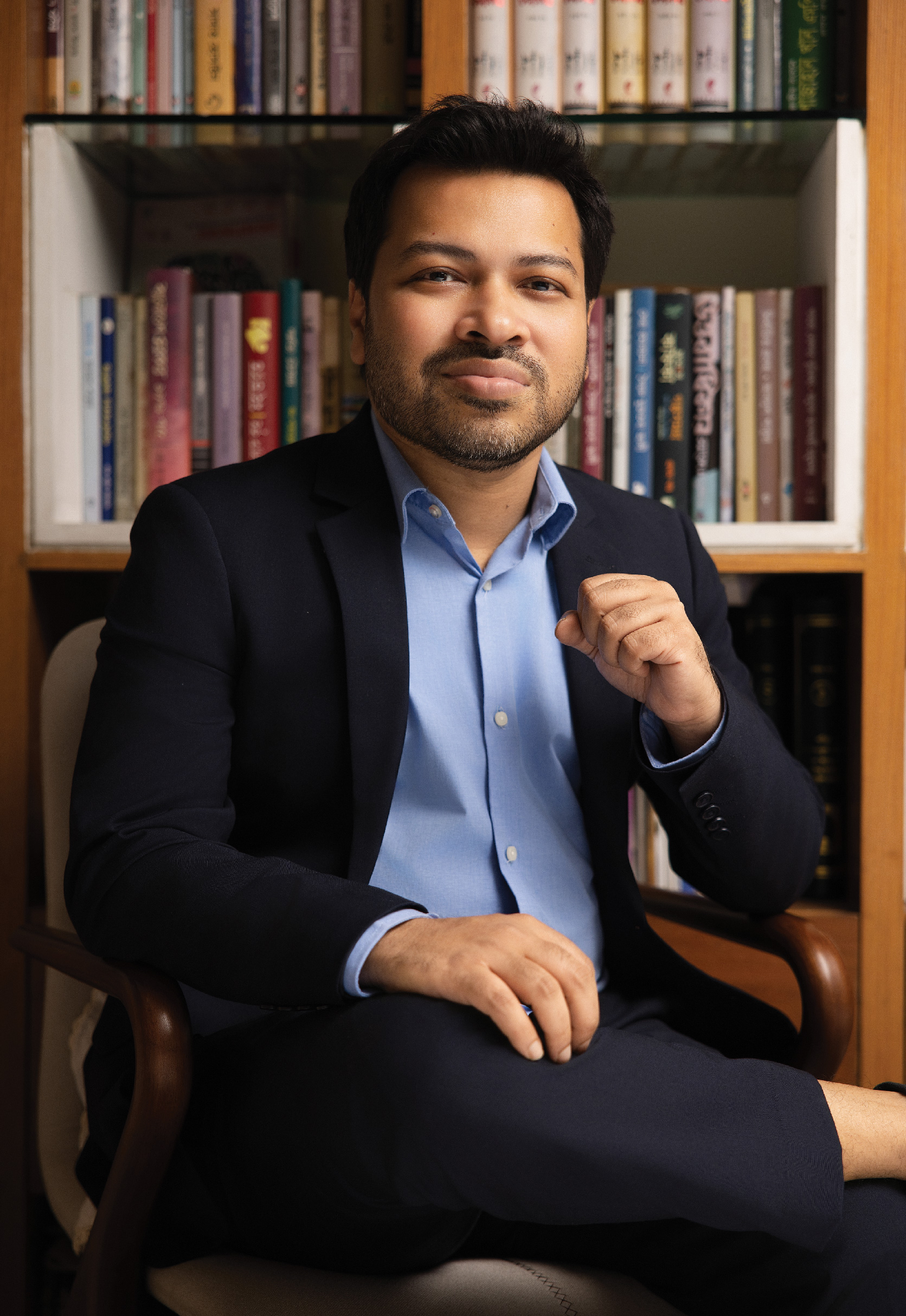
Tajdin Hassan, COO of Keeron | Photographs by Zia Uddin
Keeron: A Startup Built on Purpose, Passion & Resilience
Keeron’s story begins with a diagnosis. Tajdin identified a persistent skills gap — graduates armed with degrees but lacking applied, industry-relevant capabilities. Instead of creating courses in isolation, Keeron focused on pathways. Curriculum was shaped through rigorous market research, mentor communities, and industry vetting.
Starting Keeron was a response to a national imperative: transforming Bangladesh’s demographic dividend into a skilled, globally competitive workforce. Building the company from scratch meant operating lean. With a 10-person team, Tajdin prioritised attitude over aptitude, fostering a founder’s mindset across the organisation. Automation handled repetition; people focused on strategy and learner experience.
Success stories quickly validated the model. Learners who pivoted careers, moved from uncertainty to confidence, and found relevance in a rapidly changing digital economy, became living proof of Keeron’s mission. Upskilling, Tajdin argues, is no longer optional. In a digital Bangladesh, adaptability and continuous learning define competitiveness. Tajdin’s corporate background played a crucial role in shaping Keeron’s sustainability. Principles of governance, scalability, and Return on Investment (ROI) ensured that the startup was not merely idealistic, but resilient.
The Rollercoaster: Challenges, Cash Flow, Pressure & Pivot
Entrepreneurship is rarely linear, and Keeron faced pressures all too familiar to startups — unit economics, operational expenses, and growth expectations. Tajdin resisted the temptation of unsustainable expansion, choosing instead to refine models, adjust pricing, and focus on long- term viability.
Balancing responsibilities between The Daily Star and Keeron required rigorous prioritisation. At both institutions, Tajdin concentrated on strategy, culture, and partnerships, while empowering strong teams to manage execution.
Strategic pivots followed. By 2025, Keeron refined its focus toward deeper industry relevance and outcome-based learning. New verticals emerged, including Keeron Study Abroad, with upcoming launches in Artificial Intelligence (AI) and Small and Medium-sized Enterprises (SME) Entrepreneurship planned for 2026.
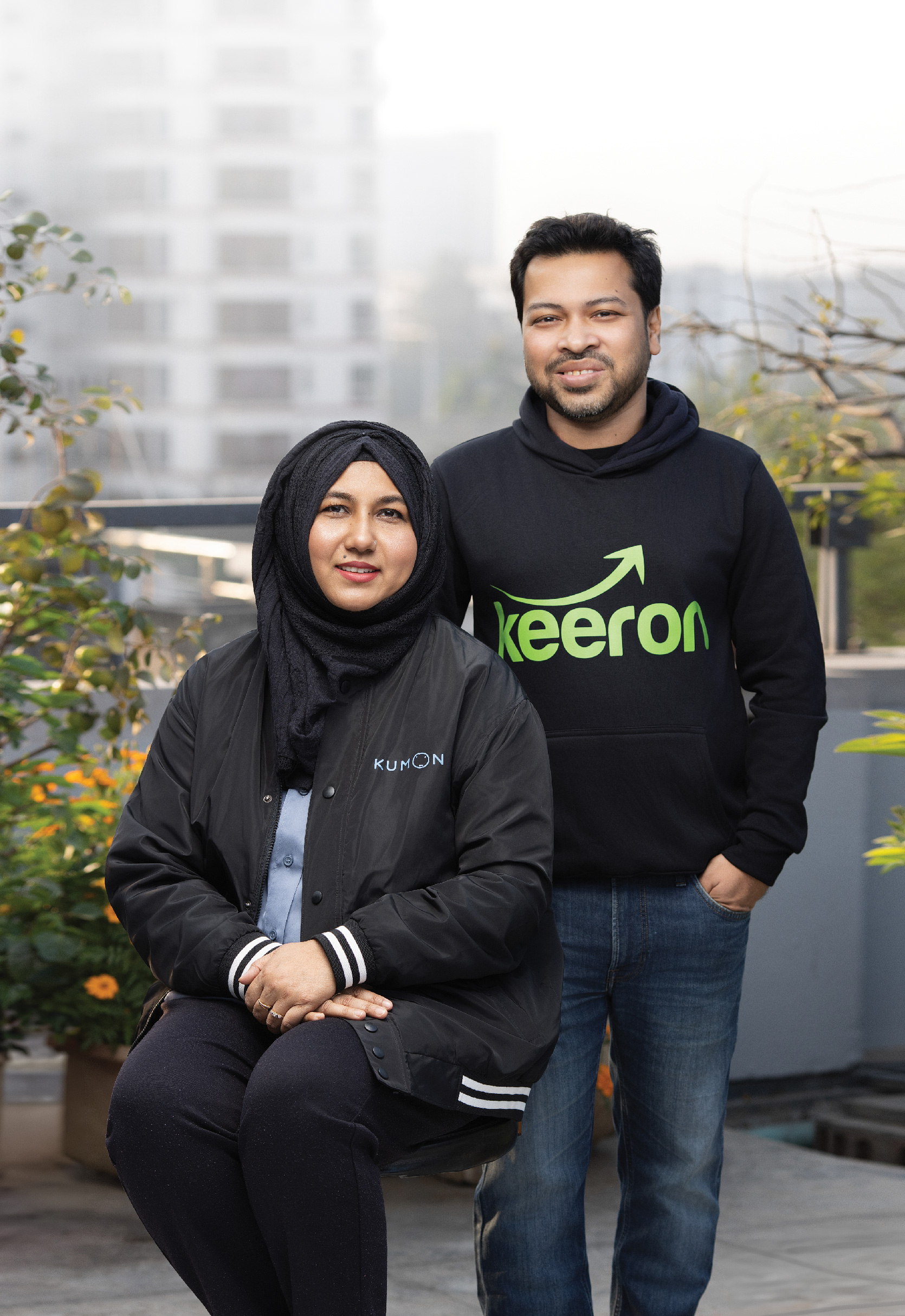
Rhidita Tasnim, Instructor and Franchisee of Kumon Gulshan Center; Tajdin Hassan, COO of Keeron | Photographs by Zia Uddin
Leadership, Marriage & Managing Two High-Intensity Careers
Behind these parallel careers lies a partnership grounded in mutual respect. Tajdin supports Rhidita by treating her work with equal seriousness — sharing decisions and respecting her autonomy. Rhidita, in turn, serves as an emotional anchor and trusted sounding board, offering unwavering belief in his long-term vision. Their shared values — integrity, discipline, resilience, and purpose-driven work — act as a stabilising force. Both Tajdin and Rhidita believe in doing things the right way, even when it is harder, and in empowering individuals to take ownership of their learning journeys.
Impact: Changing How Bangladesh Learns
Together, Kumon and Keeron address two structural gaps in Bangladesh’s education ecosystem. Kumon builds strong academic foundations by ensuring mastery of the basics before progression. Keeron tackles the employability gap by working backwards from employer needs, focusing on applied, project-based learning and real career outcomes.
Though their models differ, their mission is shared: unlocking human potential. Kumon does so through disciplined repetition and independence; Keeron through industry-aligned application. Bangladesh, they believe, needs both. A strong foundation without direction leads nowhere, while ambition without preparation is fragile.

The Future: Expanding Dreams Beyond 2025
Rhidita’s vision includes expanding Kumon Gulshan Center into a larger centre with enhanced programs that deepen impact without diluting quality. Tajdin continues to evolve Keeron as a platform for lifelong learning and global competitiveness.
As a couple, their desired legacy is not personal acclaim, but systemic change. They aspire to build a Bangladesh where no child is left behind due to weak foundations, and no professional becomes obsolete due to a lack of opportunity — a nation built on empowered, continuous learning.
In different rooms, with different learners, Tajdin Hassan and Rhidita Tasnim are shaping the same future — one lesson, one skill, one life at a time.


%20Square%20Ad%20-11.jpg&w=640&q=75)
%20Horizental%20AD-01.jpg&w=3840&q=75)
