

Tech
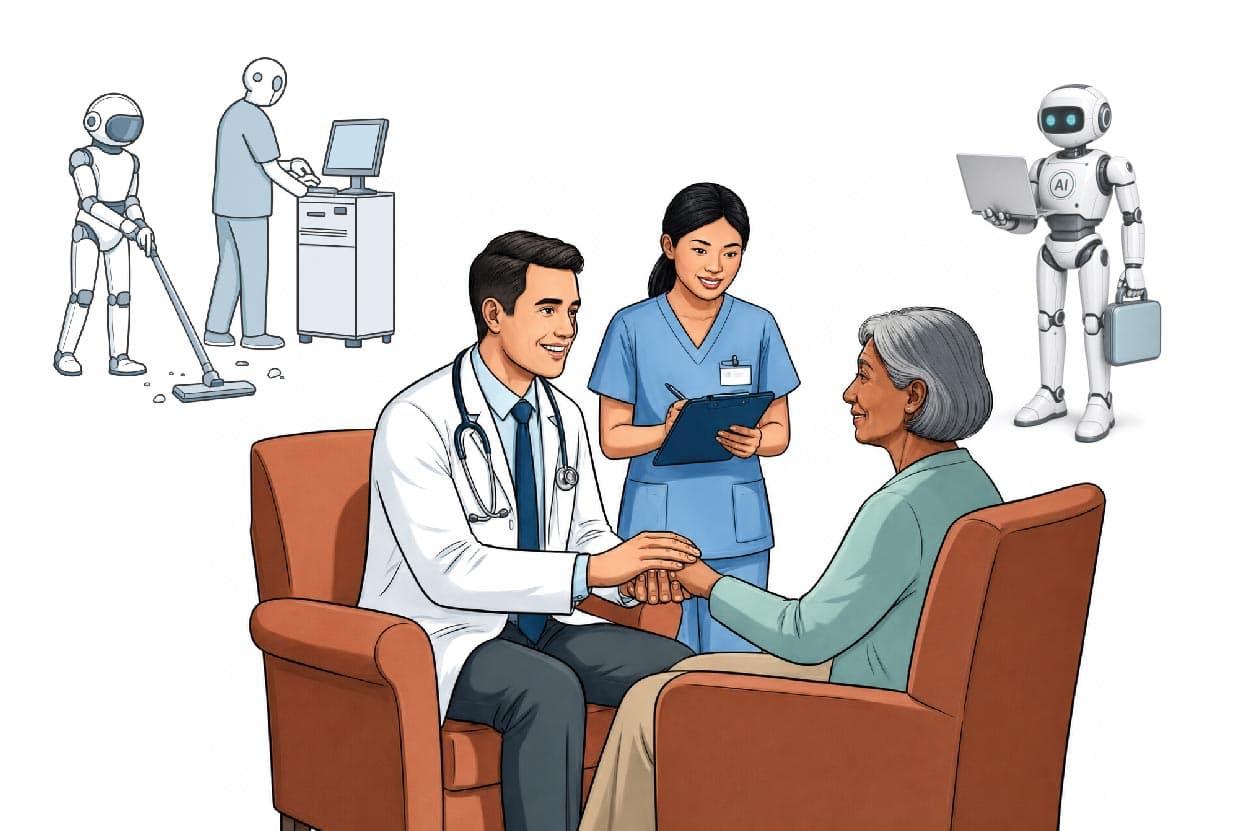
AI is entering healthcare at unprecedented speed, but its greatest value may not be replacing human expertise. It may be freeing doctors and nurses from administrative work so they can spend more time doing what technology cannot: caring for patients.

Illustrated By sk. yeahhia
21 September, 2026
As artificial intelligence enters hospitals and clinics, the most important question may not be whether machines can replace doctors. It may be whether they can give doctors more time to be human.
Imagine sitting in a doctor's office, anxious about a health problem you barely understand. After waiting for your appointment, you finally have a few minutes to explain what is wrong. But while you speak, the doctor is looking at a computer screen — typing, scrolling through records, checking boxes and entering information into the electronic medical record.
The doctor may be listening. But from the patient's perspective, it can be difficult to feel heard.
This has become one of the uncomfortable contradictions of modern healthcare. Digital technology was introduced to make medicine faster, safer and more efficient. Electronic records were supposed to make information easier to access and share. Digital systems were meant to reduce errors and streamline administrative work. Yet for many healthcare professionals, the computer has also become another source of work. The screen that was supposed to support the doctor can sometimes come to dominate the encounter.
Artificial intelligence now offers a possible way out of that problem.
AI is rapidly finding its way into healthcare, from medical imaging and clinical decision support to documentation, patient communication and administrative workflows. The arrival of generative AI has accelerated the conversation, raising both extraordinary possibilities and understandable fears. Much of the public debate has focused on whether AI will eventually replace doctors.
That may be the wrong question.
The more immediate and consequential question is what AI should do so that doctors, nurses and other healthcare professionals can do their jobs better.
The arrival of generative AI has accelerated the conversation, raising both extraordinary possibilities and understandable fears. Much of the public debate has focused on whether AI will eventually replace doctors.
The Problem Behind the Promise
Healthcare is an unusually demanding industry because the work combines enormous amounts of information with decisions that have deeply human consequences. A physician may spend years developing clinical expertise, only to find that a significant portion of the working day is consumed by documentation, record-keeping, administrative communication and other tasks that do not require the full extent of that expertise.
The same pressure affects nurses and other healthcare workers. They must balance patient care with documentation, coordination, reporting and increasingly complex administrative requirements. When workloads become excessive, the consequences are not limited to employee dissatisfaction. Fatigue and burnout can affect the quality of the patient experience and make it harder for professionals to provide the attention and communication that good care requires.
This creates a particularly troubling paradox: the people whose profession is built around caring for others can find themselves with less and less time to actually care.
Patients experience this problem from one side of the examination room. Healthcare professionals experience it from the other. A patient may feel that the doctor is paying more attention to the computer than to them, while the doctor may feel that the system is demanding information at precisely the moment when they should be listening to the person sitting in front of them.
The administrative burden can extend beyond the hospital or clinic. Documentation that is not completed during working hours can follow healthcare workers home, creating what has informally been called "pajama time" — the unpaid or after-hours work required to keep up with clinical documentation and administrative responsibilities.
This is where the promise of AI becomes particularly interesting.
What If AI Gave Time Back?
One of AI's most practical advantages is its ability to process large quantities of information and perform repetitive tasks quickly. In healthcare, that could mean helping organise medical records, summarise consultations, extract relevant information from clinical notes, prepare documentation, answer routine questions and support administrative workflows.
Consider a routine consultation. After speaking with a patient, a doctor may need to document the symptoms discussed, relevant history, examination findings, assessment and treatment plan. An AI-enabled system could potentially assist by preparing a draft summary based on the conversation, leaving the physician to review, correct and approve it.
The important point is not that AI writes the note. The important point is what the doctor might do with the time that is no longer spent writing it. A few additional minutes with a patient may not sound transformative. But healthcare operates at scale. A small amount of time recovered from each consultation can become hours over the course of a week and a substantial amount of capacity across a hospital or health system.
That changes the business case for AI. The value of automation in healthcare should not be measured only by how many tasks a machine can complete. It should also be measured by what happens to the human time that automation creates.
If a doctor spends less time documenting, perhaps there is more time for explanation. If a nurse spends less time on repetitive administrative work, perhaps there is more time to sit with a frightened patient. If a healthcare professional finishes documentation during working hours instead of taking it home, perhaps the technology has improved not only productivity but the sustainability of the profession.
In other words, the real productivity gain may not be measured in keystrokes saved. It may be measured in human attention returned to the patient.
Efficiency Is Not the Same as Care
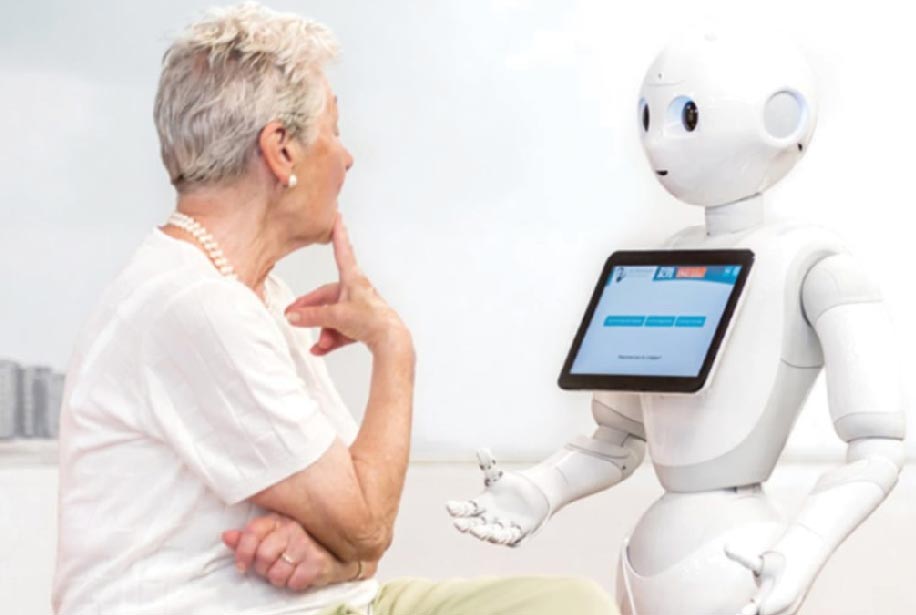
This distinction matters because healthcare organisations face a powerful incentive to use technology primarily for efficiency.
AI can potentially help hospitals process information faster, automate routine tasks and increase the number of patients a system can handle. Those are legitimate objectives. Healthcare systems everywhere face pressure to control costs while meeting growing demand.
But there is a danger in defining success too narrowly. If AI simply allows a hospital to see more patients in less time, healthcare may become more efficient without becoming more humane. The technology could end up accelerating the very system that already leaves professionals feeling overextended.
The more meaningful question is therefore not simply, "How much time can AI save?" It is, "What will we do with the time it saves?" That is ultimately a management decision as much as a technological one.
Hospitals could use AI-generated efficiencies to increase throughput. They could use them to reduce administrative staffing requirements. They could use them to shorten appointment times. Or they could deliberately reinvest some of those gains into patient interaction, professional development and more sustainable workloads. The technology does not make that decision. People do.
A Machine Cannot Carry the Emotional Weight of Medicine
There is another limit to AI that is easy to overlook in discussions about automation: healthcare is not simply an information-processing industry. Medicine involves information, but it also involves fear, uncertainty, grief, hope and difficult choices.
A computer can analyse symptoms and identify patterns in medical data. It can help generate possible diagnoses, summarise clinical information and produce an explanation of a treatment. But healthcare professionals regularly encounter situations where the most important part of the interaction is not the information itself.
What happens when a patient begins to cry? What happens when a family is struggling to understand a diagnosis? What happens when a patient is more frightened by what an illness could mean for their children, finances or future than by the disease itself? These are not merely clinical questions. They are human ones.
An AI system may be capable of recognising emotional language and generating a sympathetic response. But generating an appropriate response is not the same thing as sharing the human experience behind it. The distinction matters because trust in healthcare is built through more than accurate information.
Sometimes a doctor needs to know when to explain something again, when to pause, when to ask another question, or when silence is more appropriate than another piece of information. Technology can assist with medicine. It should not be expected to replace the human relationship through which medicine is delivered.
The Risks Are Real
None of this means AI should be adopted uncritically. The same technologies that create opportunities also introduce new risks.
AI systems can produce inaccurate information, overlook important details or generate recommendations based on incomplete or inappropriate data. In many areas of everyday life, an incorrect AI response may be little more than an inconvenience. In healthcare, the consequences can be considerably more serious. That makes human oversight essential.
Healthcare professionals must be able to question AI-generated recommendations rather than treating them as authoritative simply because they were produced by a sophisticated system. An AI tool should support clinical judgement, not quietly replace it.
There is also the problem of bias. AI systems learn from data. If the data used to develop or evaluate a system does not adequately represent different populations, existing disparities can be reproduced — or potentially amplified — through automated recommendations.
A machine does not become neutral simply because it is a machine. Healthcare organisations therefore need to ask difficult questions before deploying AI at scale. How was the system trained? On whose data? How does it perform across different patient populations? How are errors identified? Who is responsible when the system is wrong? And how frequently is its performance reassessed after deployment?
These are not technical questions alone. They are questions of governance and accountability.
The New Value of Trust
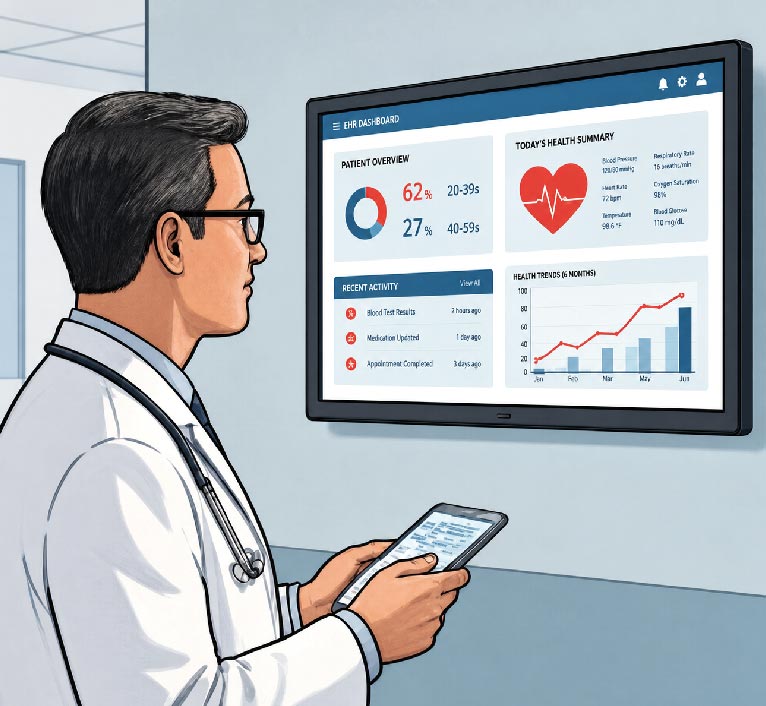
Privacy presents another challenge. Medical records contain some of the most sensitive information a person can share. As healthcare organisations integrate AI into documentation, analysis and decision-making, more systems may require access to patient information. That creates a responsibility that cannot be treated as an afterthought.
The pursuit of convenience cannot come at the expense of patient privacy. Healthcare providers and technology companies need clear rules around data access, security, storage and use. Patients should be able to understand, at an appropriate level, how AI is being used in their care and what happens to the information involved.
Trust is particularly important because healthcare is different from many other industries. A consumer may tolerate an imperfect recommendation from a shopping algorithm. A patient may not have the same tolerance when the recommendation concerns a diagnosis or treatment.
As AI becomes more deeply embedded in healthcare, trust may become one of the technology's most important assets — and one of its easiest to lose.
The Future Is Not Humans Versus Machines
The debate around AI in healthcare is often framed as a competition between people and machines. But that framing misses the more useful possibility. Humans and AI are good at different things.
AI can process enormous amounts of information, identify patterns, summarise material and perform repetitive tasks at a scale that is difficult for individuals to match. Healthcare professionals bring clinical experience, contextual judgement, communication, ethical reasoning and an understanding of the individual behind the medical record.
The goal should not be to make the machine behave like a doctor or the doctor behave like a machine. The goal should be to design the system so that each does what it is best positioned to do.
That means allowing AI to work in the background where it can reduce unnecessary administrative effort, organise information and support clinical work — while keeping human professionals responsible for decisions that require judgement, accountability and communication. The distinction is important.
If AI becomes another layer of technology that healthcare workers must monitor, correct and maintain, it may simply create a different kind of administrative burden. But if it is designed around actual clinical workflows and measured by meaningful outcomes, it has the potential to remove friction from the system rather than add to it.

An AI system may be capable of recognising emotional language and generating a sympathetic response. But generating an appropriate response is not the same thing as sharing the human experience behind it. The distinction matters because trust in healthcare is built through more than accurate information.
Putting the Patient Back at the centre
Ultimately, the question is not whether healthcare will become more technological. It almost certainly will. The question is what we want that technology to accomplish.
If hospitals use AI primarily to cut costs, increase throughput and automate as much human work as possible, the technology may deliver efficiency while leaving the underlying experience of care largely unchanged.
But if healthcare organisations use AI to reduce unnecessary workloads, support exhausted professionals and return time to doctors and nurses, the technology could accomplish something more valuable than automation.
It could make room for attention. That may be the most important measure of AI's success in healthcare.
The future should not be a clinic where patients communicate primarily with screens and algorithms. Nor should it be a system in which machines make consequential medical decisions without meaningful human oversight.
It should be a system in which technology quietly handles what technology does well, while healthcare professionals have more capacity to do what people do best. A machine can read a scan. It can identify a pattern. It can organise a medical record. It can prepare a summary. But when a patient receives frightening news, they need more than information. They need someone who can listen. Perhaps the most valuable role AI can play in healthcare is therefore not to become more like a doctor, but to give doctors more time to be doctors.
The future of healthcare does not have to be human versus machine. It can be a machine working behind the scenes — and humanity where it matters most: at the bedside.


